Tier List
Godzilla Movies Ranked: All 38 Films (2026)
All 38 released films, from the 1954 original to Godzilla x Kong: The New Empire, ranked from S-tier to D-tier. Then settle your own order with head-to-head comparisons.
The Complete Godzilla Tier List
See the A to D tiers (33 more films)Hide the A to D tiers



Thirty-eight films across seventy-two years, 3,805 minutes of running time, four separate Japanese continuities and two American ones, and no two fans who agree on where the good ones stop. This is the longest continuously running film franchise on this site by a wide margin, and it is the only one where the first film and the fifth-best film are separated by more than forty years. Here is every Godzilla movie ranked into classic S/A/B/C/D tiers. Think Godzilla vs. Destoroyah should be first, or that the 1998 American one deserves better than last? Settle it yourself in minutes with Shortlist.
Each film below also says where to watch it in the US, checked October 7, 2026 (JustWatch). Rights move, so those lines disappear rather than guess once that check is over three weeks old.
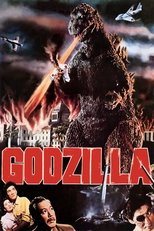
Godzilla
(1954)The film every other one here is a response to, and the only one that is not really a monster movie. Ishiro Honda shot it nine years after Hiroshima and four months after the Lucky Dragon No. 5 crew was dusted with fallout from a hydrogen bomb test at Bikini Atoll, and the result is closer to a disaster documentary than a creature feature: long stretches of hospital wards, Geiger counters, a choir of schoolgirls on the radio, and a scientist who destroys his own weapon and himself rather than let a government own it. Eiji Tsuburaya built the suit and the miniature Tokyo, Akira Ifukube wrote the march that has outlived almost everyone involved, and the monster is on screen for a fraction of its 96 minutes. Seventy-two years and thirty-seven sequels later nothing in the series has matched it, and most of the good ones are the ones that tried.
Streaming on Criterion Channel and HBO Max
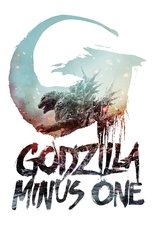
Godzilla Minus One
(2023)The best Godzilla film in sixty-nine years and the proof that the series never needed a bigger budget, only a better reason. Takashi Yamazaki wrote, directed and supervised the visual effects himself for about $15 million, which is roughly a tenth of what the MonsterVerse spends, and it took $113.7 million worldwide and the Academy Award for Best Visual Effects. What makes it work is not the effects. It is that the film is genuinely about a kamikaze pilot who did not fly his mission, set in a Tokyo already flattened by firebombing, in a country whose government has no intention of helping, so the monster arrives as one more thing survivors have to face without institutional permission. The Ginza sequence is the most frightening five minutes in the franchise. It is the first Godzilla film to win an Oscar and it deserved it for the script.
Streaming on Netflix
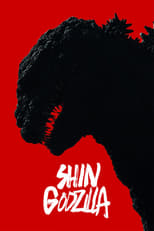
Shin Godzilla
(2016)Hideaki Anno and Shinji Higuchi made a procedural about bureaucracy and it is one of the most exciting films in the series. Godzilla comes ashore and the movie cuts to committee rooms: subtitled name plates, ministers convening subcommittees to decide who has authority to convene a subcommittee, a prime minister asking for a legal basis before he can order anything. The disaster is real and the response is paperwork, which is the point, because it was made five years after Fukushima and it is furious. The creature design is the strangest in the franchise, an evolving thing with dead eyes and a mouth that unhinges, and the moment it stops walking and simply opens fire on Tokyo is the single most unnerving image the series has produced. It won Picture of the Year at the Japan Academy Prize, made $78.1 million on a $15 million budget, and nothing else looks like it.
Streaming on HBO Max
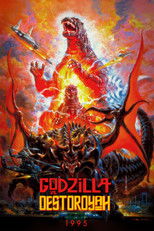
Godzilla vs. Destoroyah
(1995)TMDB rates this the best film in the entire franchise at 7.779, above the 1954 original, and the reason is that it is the only sequel that treats the original as something to finish rather than repeat. Godzilla is dying: his heart is a melting nuclear reactor, he glows orange, and everything he touches he burns. The monster hunting him is a colony of crustaceans mutated by the Oxygen Destroyer, the weapon that killed the first Godzilla in 1954, so the film closes a loop nobody had touched in forty-one years. Takao Okawara stages the death honestly and at length, with a countdown and no reprieve, and Akira Ifukube scored it as a requiem. The vote count is 310 against the original's 1,147, which is why this list keeps 1954 first: that is a score from people who watched all six Heisei films to get here, and it is still the right call to put this fourth.
Free with ads on The Roku Channel, YouTube and Tubi
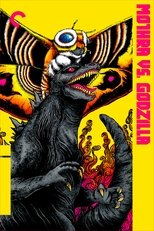
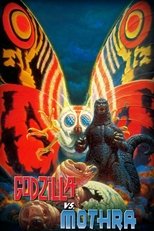
Mothra vs. Godzilla
(1964)The best of the fifteen Showa films and the one that found the formula everything after it copied badly. Honda shoots it as a newspaper story: two reporters, a washed-up egg, a promoter who wants to charge admission to it, and a village that has already told everyone what happens next. Godzilla is still a villain here, still slow and still frightening, and Mothra fights him as an exhausted adult protecting an egg rather than as a superhero. Ifukube and the Peanuts do the singing, the miniature work at Nagoya Castle is the best in the run, and the whole thing is 89 minutes with no fat on it. Every later Showa entry got sillier, cheaper and more child-facing; this is the last one made for adults and it is the one to show somebody who thinks the old ones are a joke.
Streaming on Criterion Channel and HBO Max
Rank Godzilla your way
Our top 5, head-to-head. Tap the one you prefer and we will build your order, then show you where you disagree with us.
The Reel
One sharp movie newsletter, every Tuesday
What to watch, what to skip, and where it lands on the rankings. Free, no spam, unsubscribe anytime.
Just want the tier sheet? Download it free, no email needed.
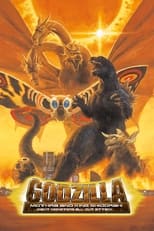
Godzilla, Mothra and King Ghidorah: Giant Monsters All-Out Attack
(2001)Known to everyone as GMK, and the meanest, angriest Godzilla of the modern era. Shusuke Kaneko had already made the best Gamera films and he brought the same idea here: take the monster seriously as a horror antagonist. His Godzilla is possessed by the souls of the Pacific War dead, walks with blank white eyes, and kills people on purpose, in hospitals and on bridges, in scenes staged like a slasher. Mothra and Ghidorah are recast as guardian spirits of Japan rather than aliens, which turns the fight into something closer to folk horror than science fiction. TMDB has it at 7.5 and it is a genuine outlier in the Millennium run: those films were made cheaply and quickly to a formula, and this one ignored the formula completely. If you have only seen the American films, start here.
Streaming on Netflix
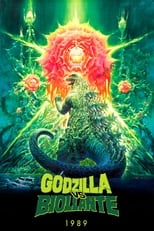
Godzilla vs. Biollante
(1989)The strangest premise in the franchise, played completely straight, and the film that proved the 1984 reboot had somewhere to go. A grieving geneticist splices his dead daughter's cells into a rose and then into Godzilla's, and the thing that grows out of it is a hundred-foot plant with a crocodile's mouth. Kazuki Omori shoots it as a bio-ethics thriller with corporate espionage, a psychic teenager and an American arms company, and the Biollante design is the only monster in the series that is genuinely difficult to look at. It made $7 million on a $5 million budget, which Toho considered a failure, and the studio pivoted straight back to Ghidorah and Mothra for the rest of the decade. Fans have spent thirty-seven years arguing that was the wrong lesson. TMDB has it at 7.4 and this list agrees with the fans.
Streaming on HBO Max
Godzilla vs. Mechagodzilla II
(1993)The best-looking film of the Heisei run and the one that gets the emotional trick right. The military builds Mechagodzilla out of salvaged alien technology, which finally makes the robot a human weapon rather than another monster, and the film sets it against a plot about a hatched Baby Godzilla and the woman who imprints on it. That should be unbearable and it is not, because Takao Okawara keeps the human scenes about competence and the monster scenes about weight: the G-Force sequences have the texture of a war film, the miniature Chiba coastline is superb, and the Mechagodzilla suit is the best mechanical design Toho ever built. $18 million on a $9.5 million budget, 7.3 on TMDB, and the ending is the closest the series came to sentiment that it earned.
Free with ads on YouTube and Tubi
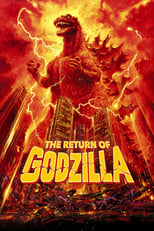
The Return of Godzilla
(1984)The reboot that made the modern series possible, and the only Godzilla film that is really a Cold War thriller. Nine years after the Showa run collapsed into children's matinees, Koji Hashimoto put the monster back in the 1954 continuity, deleted every sequel, and built the plot around a Japanese prime minister refusing both superpowers permission to use a nuclear weapon on Tokyo. The Soviet and American ambassadors get real scenes; so does a fishing boat, a nuclear power plant and a Diet building. The Super X hovercraft is a good idea and the Shinjuku sequence is a great one. It is slower than what came after and the suit is stiff, which is what keeps it out of S, but everything good about the Heisei films starts here, and it took $11 million on a $6 million budget at a moment when Toho had no reason to believe it would.
Streaming on Criterion Channel and HBO Max
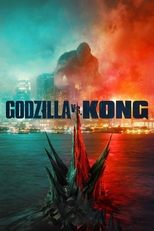
Godzilla vs. Kong
(2021)The MonsterVerse film that finally stopped apologising for being a monster movie. Adam Wingard's answer to two films of grey rain and human subplots was to shoot the fights in daylight, in neon, on an aircraft carrier and then in Hong Kong, and to let Kong hold an axe. It is not deep and does not pretend to be: the hollow-earth science is nonsense, half the human cast has nothing to do, and the film knows it. What it has is the clearest action staging in the series since the 1990s and a genuine sense of scale. It made $470.1 million on a $200 million budget during a pandemic while streaming day-and-date on HBO Max, and at 10,777 votes it is the most-rated film in the franchise on TMDB, at 7.525. This is the one that made a generation care about the name.
Rent or buy only
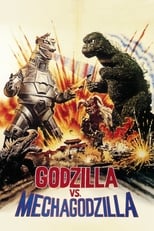
Godzilla vs. Mechagodzilla
(1974)The twentieth-anniversary film and the last genuinely good one of the Showa era. Jun Fukuda finally had a premise worth his energy: a Godzilla who turns up early, behaves oddly, and is unmasked as a robot in a disguise, which gives the film a first act that is actually a mystery. Add ape-alien invaders from the Third Planet of the Black Hole, a prophecy on a cave wall, an Okinawan guardian monster and the best fight choreography in the run, and it moves like nothing else Toho made that decade. The Mechagodzilla design is so good it has come back in five subsequent films across three continuities. At 84 minutes it does not outstay itself, and it is the clearest evidence that the Showa collapse was about budgets rather than ideas.
Streaming on Criterion Channel and HBO Max
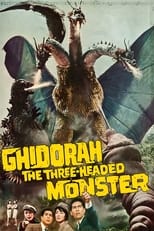
Ghidorah, the Three-Headed Monster
(1964)The hinge of the entire franchise: this is the film where Godzilla stops being the villain. Toho released it five months after Mothra vs. Godzilla, and Honda uses the speed to do something structurally strange, cutting between an assassination plot, an amnesiac princess prophesying from a rooftop and a monster summit brokered by the Shobijin fairies, in which Mothra talks Godzilla and Rodan into defending a planet none of them likes. King Ghidorah arrives out of a meteorite as a genuinely cosmic threat and has been the series antagonist ever since. It is 92 minutes, it is fast, and it is the moment the tone changed for the next eleven films, for better in this one and worse in most of the rest.
Streaming on Criterion Channel and HBO Max
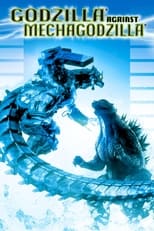
Godzilla Against MechaGodzilla
(2002)The Millennium formula at its most competent. Masaaki Tezuka builds the robot on the bones of the 1954 Godzilla, which gives Kiryu a genuinely eerie idea to work with: the machine sometimes remembers it used to be the monster, and goes berserk. Yumiko Shaku plays the pilot carrying the blame for a failed operation, and the film gives her an actual arc rather than a callsign. At 88 minutes it is one of the shortest in the series and it does not waste any of them. TMDB has it at 7.5, and the only thing keeping it out of A is that everything around the Kiryu material is standard-issue: generic officers, generic press conferences, and a plot that only really starts once the robot malfunctions.
Free with ads on YouTube and Tubi
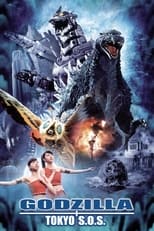
Godzilla: Tokyo S.O.S.
(2003)A direct sequel to Godzilla Against MechaGodzilla and the rare Millennium film that continues something. Mothra returns and asks Japan, politely, to give the bones back: the 1954 Godzilla's skeleton is inside the machine, and the dead should be returned to the sea. That is a genuinely good premise for a kaiju film and Tezuka takes it seriously, closing his two-parter with a robot choosing its own end. The miniature work is the best of the Millennium run and the Mothra effects are lovely. It is held back by a human cast that never becomes memorable and by 91 minutes that feel tight rather than lean, but as a pair with the 2002 film it is the most coherent stretch of that entire era.
Free with ads on YouTube
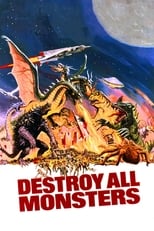
Destroy All Monsters
(1968)The everything-at-once film, and the one that would have ended the Showa run on a high if Toho had let it. Honda came back for the fifteenth-anniversary picture with a 1999 setting, eleven monsters, a moon base, aliens controlling the kaiju through implanted transmitters, and a final battle at Mount Fuji in which Godzilla, Rodan, Mothra, Gorosaurus, Anguirus and Minilla gang up on King Ghidorah. The scale is real and the miniature work is expensive in a way nothing after it was. It is not a good story: the human plot is a series of corridors, and the monsters are on screen far less than the poster promises. But the Fuji sequence is the best pure spectacle of the era and it is a genuinely fitting send-off, which makes what Toho actually did next even harder to explain.
Streaming on Prime Video, Criterion Channel and Fandor
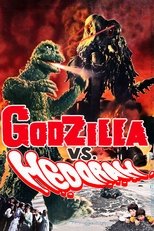
Godzilla vs. Hedorah
(1971)The weirdest film in the franchise by a distance, and the one that most deserves its cult. Yoshimitsu Banno made an anti-pollution horror film for children with animated interludes, a psychedelic nightclub sequence, a fish-eyed lounge song about a poisoned sea, and a monster made of industrial sludge that kills people on screen by dissolving them. Godzilla flies in it, propelled by his own atomic breath, and the film is completely serious about that. Ishiro Honda hated it, Tomoyuki Tanaka reportedly told Banno he had ruined the series, and Banno never directed another Godzilla film. It is also the only Showa sequel with a real point of view: sludge on the mudflats, mercury in the water, and an ending that says the next one is already coming. Uneven, cheap, unforgettable.
Streaming on Criterion Channel and HBO Max
Godzilla vs. King Ghidorah
(1991)The one where time travellers from 2204 go back to 1944 to erase Godzilla and accidentally create King Ghidorah instead, and it is exactly as chaotic as that sounds. Kazuki Omori swings enormously: an android assassin, a Japanese soldier who meets the dinosaur that will become Godzilla on Lagos Island in the war, a resurrected Mecha-King Ghidorah, and a subplot about a Japanese corporation buying America in the future that got the film accused of nationalism on release. The plot does not survive a second look and the 1990s effects are stretched thin by the ambition. But it is never boring for a second of its 103 minutes, the Lagos Island sequence is genuinely moving, and $11 million on a $12 million budget made Toho keep going. TMDB has it at 7.0.
Streaming on Criterion Channel and HBO Max
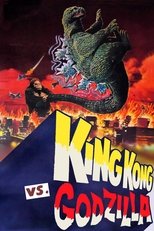
King Kong vs. Godzilla
(1962)The most successful Godzilla film ever released in Japan by admissions, and a completely different animal from the 1954 picture: this is a broad corporate satire in which a pharmaceutical company's TV advertising department goes looking for a giant ape to boost its ratings. Honda plays almost all of it for laughs, the Kong suit is famously poor, and the fight at Mount Fuji is closer to a wrestling match than a battle. It is also enormously entertaining, has the confidence of a studio at the peak of its powers, and it is the reason there was a franchise at all: the box office here is what turned a one-off into a series. Watch the Japanese cut. The US re-edit is a different and much worse film that TMDB files separately.
Not streaming in the US
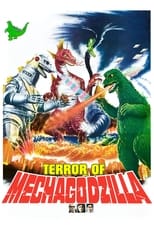
Terror of Mechagodzilla
(1975)Honda's last film, and it is a strange, sad, oddly beautiful way to close fifteen years. The budget is visibly gone, the fight is short, and half the cast is a returning robot. What it has instead is Katsura, a scientist's resurrected cyborg daughter with the controls for Mechagodzilla wired into her chest, and a plot that is genuinely about her rather than about the monsters. It is the darkest Showa film after 1954 and the only one that ends on a suicide. It also flopped so badly that Toho stopped making Godzilla films for nine years. As a piece of work it is uneven and it is undeniably cheap, but Honda directing the last one, about a girl who does not want to be a weapon, is the right ending for that era.
Streaming on Criterion Channel, FlixFling and HBO Max
Godzilla vs. Mothra
(1992)The most commercially successful film of the Heisei run at around $20 million, and it earned that by being the most purely fun one. Takao Okawara opens with an Indiana Jones pastiche, adds Battra as a black-armoured evil Mothra with a genuinely great design, and stages a three-way fight at the Yokohama Landmark Tower that is the best-looking sequence in the era. The environmental message is delivered with a trowel and the human characters are thin even by the standards of these films. But the Mothra material is charming, the Battra fight in Nagoya is superb, and it did more than anything else to keep the series commercially alive into the mid-1990s. TMDB has it at 6.9.
Streaming on Criterion Channel
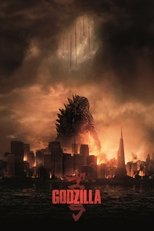
Godzilla
(2014)The film that restarted the American franchise and the one that is still arguing with its own audience. Gareth Edwards makes an enormously confident picture about scale: the halo jump into the red flares, the tsunami arriving in Honolulu behind a boy on a monorail, the monster glimpsed through a school bus window. It is beautifully directed and structurally frustrating. Bryan Cranston, the only human being in it with a character, is killed in the first act, leaving a blank protagonist to be shipped between set pieces; the film keeps cutting away from its own fights; and Godzilla is on screen for about eleven minutes of 123. It made $525.0 million on a $160 million budget and it is why the MonsterVerse exists. TMDB has it at 6.366, the lowest of the four American Godzilla pictures on this list, and the score is mostly about the human half.
Streaming on Paramount+
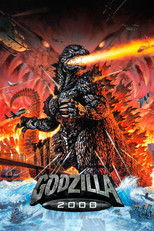
Godzilla 2000: Millennium
(1999)Toho's answer to the Emmerich film, made fast and released fourteen months after it, and the first thing it does is put a real Godzilla suit back on screen. Takao Okawara aims low and hits: a storm-chaser scientist and his daughter, a government agency that wants the monster dead, an alien craft dredged out of the sea, and Orga, whose design is genuinely nasty. The orange atomic breath is a great look and the Tokyo fight has real weight. It is thin and the pacing sags in the middle third, but as a corrective it worked, it kept Toho making these for another five years, and the dubbed US release is one of the more entertaining English tracks in the series.
Rent or buy only
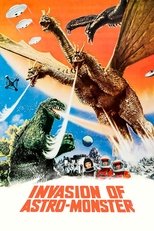
Invasion of Astro-Monster
(1965)Planet X, a race of aliens in wraparound sunglasses who borrow Godzilla and Rodan to deal with a Ghidorah problem and then predictably turn out to be lying, and Nick Adams as an American astronaut doing his best. Honda gets a few genuinely good ideas out of it, mainly the flat grey design of Planet X and the alien insistence that everything on Earth is a resource, and the film has a real sense of the mid-1960s space race about it. It is also the film with Godzilla's victory dance, which is where a lot of people decide the Showa era lost the thread. Enjoyable, cheap and completely weightless.
Streaming on Criterion Channel and HBO Max
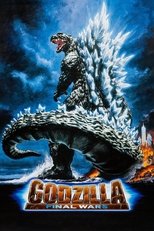
Godzilla: Final Wars
(2004)The fiftieth-anniversary film, the most expensive Toho Godzilla of its time at $19.5 million, and a genuine mess that a lot of people love. Ryuhei Kitamura made a Matrix film with kaiju in it: mutant super-soldiers, wire-work fistfights, Don Frye as a submarine captain, an alien invasion, fifteen monsters and a sequence in which Godzilla destroys the 1998 American Godzilla in under a minute. The energy is real and the affection for the series is obvious. It also has no interest in tension, cuts every fight to ribbons, and spends more time on humans punching each other than on the monster. It took $12 million against that budget and Toho shelved the series for twelve years.
Free with ads on YouTube and Tubi
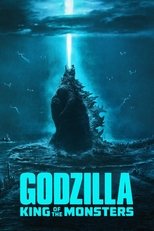
Godzilla: King of the Monsters
(2019)The corrective to 2014 that overcorrects into noise. Michael Dougherty gives the audience exactly what it asked for, four monsters and constant fighting, and then shoots almost all of it at night in rain, ash and lens flare, so it is often impossible to tell what is happening. Bear McCreary's score is superb and the Ghidorah design is the best the character has ever had. Against that: a human plot built on a scientist who releases a global extinction event on purpose for reasons the film cannot make coherent, and a cast of good actors given nothing. $387.3 million on a $170 million budget was a disappointment, and it is the film that made Warner pivot straight to Kong. TMDB has it at 6.687.
Streaming on VIX
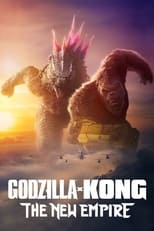
Godzilla x Kong: The New Empire
(2024)The highest-grossing film in the franchise at $571.8 million on a $150 million budget, and the point at which the MonsterVerse became a cartoon. Adam Wingard doubles down on everything that made Godzilla vs. Kong fun and removes the restraint: most of the film is inside the hollow earth with Kong, who now has a small ape sidekick and a mechanical arm, while Godzilla naps in the Colosseum and turns pink. There are genuinely good moments and the colour palette is a relief after 2019. But there is no threat anywhere in it, the human scenes are filler between fights, and it is the first of these that plays entirely as content. Fun with a crowd, weightless alone.
Streaming on Prime Video and HBO Max
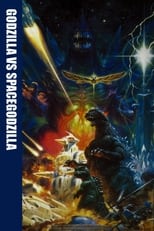
Godzilla vs. SpaceGodzilla
(1994)The Heisei run running out of ideas one film before it found a great one. The premise is a shrug, cells of Godzilla carried into space and mutated into a crystal-shouldered double, and the film hangs a psychic-communication plot and a robot called M.O.G.U.E.R.A. off it. Kensho Yamashita was a first-time Godzilla director and it shows in the staging: the fights are flat, the Fukuoka finale is oddly lit, and Little Godzilla is designed for a toy shelf rather than a film. It is not incompetent, it made $20 million, and the SpaceGodzilla design itself is memorable. It is just the one entry in that six-film run with nothing to say.
Free with ads on Tubi
Godzilla vs. Gigan
(1972)Cockroach aliens running a monster theme park from a Godzilla-shaped office tower, a manga artist as the hero, and Gigan, who has hooks for hands and a buzzsaw in his abdomen and is the best new monster of the late Showa era. The film is also visibly broke: large sections are stock footage from earlier entries, the suits are the worn ones, and Godzilla and Anguirus talk to each other in speech bubbles. What survives is Gigan himself, who actually draws blood, which no Showa monster had done in years. Cheap, fast, and more entertaining than its reputation.
Streaming on Criterion Channel and HBO Max
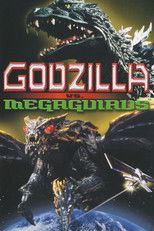
Godzilla vs. Megaguirus
(2000)A perfectly serviceable film with an unusually good idea buried in it: an alternate timeline in which Japan abandoned nuclear power after 1954 and Godzilla kept coming back anyway. Masaaki Tezuka spends the rest of the runtime on a black-hole weapon, a swarm of prehistoric dragonflies and a special-forces unit led by a soldier with a grudge, none of which is bad and none of which is memorable. Misato Tanaka is good. The Megaguirus swarm attack on Shibuya is genuinely nasty. It is the definition of the mid-tier Millennium film: competent, cheap, forgotten by the time the credits end.
Free with ads on Tubi
Godzilla Raids Again
(1955)Made in six months to cash in, and it shows, but it is more interesting than its 6.0 rating suggests. Motoyoshi Oda drops the allegory entirely and makes a workplace picture about two spotter pilots for a tuna cannery in Osaka who happen to find a second Godzilla fighting Anguirus on an island. That is the first monster-versus-monster fight in the series and the template for the next thirty films, and it was shot at the wrong frame rate, which is why it plays too fast. The Osaka Castle destruction is good; the ending, burying the monster under an avalanche, is a genuine set piece. A rushed sequel, but the one that accidentally invented the format.
Streaming on Criterion Channel and HBO Max
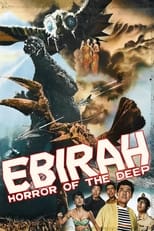
Ebirah, Horror of the Deep
(1966)Originally written as a King Kong vehicle, hastily rewritten for Godzilla, and it plays exactly like that: a bank robber, a dance contest, a stolen yacht, a secret terrorist island making heavy water, and a giant lobster guarding it. Jun Fukuda directs his first Godzilla as a spy adventure on a shoestring, with Godzilla asleep in a cave for the first act and swatting boulders like a volleyball in the second. It is likeable and it is slight, the Ebirah fight is a genuine low point for the effects team, and Godzilla being woken by lightning to serve the plot is where the character finally becomes a mascot.
Streaming on Criterion Channel and HBO Max
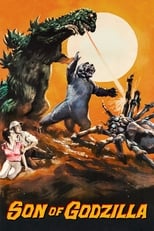
Son of Godzilla
(1967)The one with Minilla, and the film where Toho openly reoriented the series at children. Fukuda puts a weather-control experiment on a tropical island, adds giant mantises and a giant spider, and hatches a baby Godzilla who learns to breathe radioactive smoke rings from his father. The Kumonga fight is a well-staged puppet sequence and the island setting gives the effects team something other than a city to build. But Minilla is a difficult design to like, the parenting comedy is broad, and this is the exact moment the tone of the franchise changed for good. Harmless. Not for the audience that came for 1954.
Streaming on Criterion Channel and HBO Max
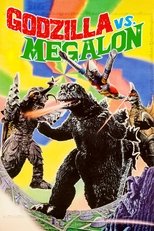
Godzilla vs. Megalon
(1973)Produced in three weeks on almost no money, and it is the least of the Showa films that still contains a whole film. Undersea civilisation Seatopia sends Megalon, a beetle with drills for hands, and the response is Jet Jaguar, a robot invented by a child in a national competition who can inexplicably resize himself. The fight is staged on a bare quarry floor with visible edges, a third of the runtime is stock footage, and Godzilla executes a flying kick by sliding backwards on his tail. It became famous in the United States through television and then through Mystery Science Theater 3000, which is the right context for it. Watch it as a comedy, because it is not going to work any other way.
Streaming on Criterion Channel and HBO Max
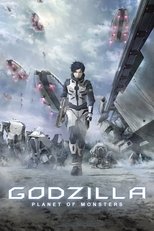
Godzilla: Planet of the Monsters
(2017)The first of Netflix's animated trilogy and the most interesting of the three, which is not a strong claim. Humanity has abandoned an Earth that Godzilla won, returns twenty thousand years later to find a planet re-grown around him, and discovers that the monster has spent the interval becoming a mountain. That is a genuinely good science-fiction premise. The execution is stiff cel-shaded CG, endless expository shipboard dialogue, characters who exist to explain the plot to each other, and a climax that is a military logistics exercise. At 89 minutes it is the shortest of the three and the only one where the idea is still visible.
Streaming on Netflix
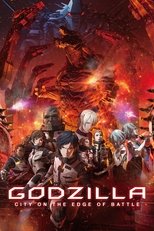
Godzilla: City on the Edge of Battle
(2018)The middle chapter, and it is almost entirely talk. The survivors meet the Houtua, discover the ruins of Mechagodzilla, and spend an hour and a half debating whether using nanometal to fight the monster is worth becoming the thing they are fighting. There is one genuinely good sequence and a large amount of standing in corridors explaining metallurgy. The animation remains stiff, the character designs remain hard to tell apart, and the film ends more or less where it started. It is the least eventful Godzilla film ever made.
Streaming on Netflix
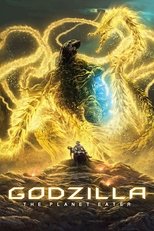
Godzilla: The Planet Eater
(2018)The trilogy ends by replacing its monster movie with a theology lecture. Ghidorah arrives as a cosmic god summoned by a religious cult, and the confrontation is staged as a mostly abstract sequence of golden light in which physics is explicitly suspended, so nothing can be judged, felt or lost. The final act is dialogue about faith and extinction delivered by characters the previous two films never made real. There is a good idea in here about a species that cannot stop building the thing that destroys it, and the film reaches it in the last four minutes after ninety of preaching. The weakest of the three and the weakest thing in the franchise apart from the two below it.
Streaming on Netflix
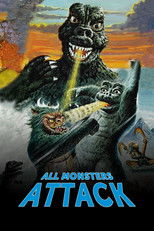
All Monsters Attack
(1969)At 5.1 on TMDB this is the lowest-rated film in the series and the rating is fair. It is 70 minutes long, it is made almost entirely of fight footage lifted from Ebirah and Son of Godzilla, and it is not really a Godzilla film: it is a film about Ichiro, a latchkey child in industrial Kawasaki who is bullied at school and imagines Monster Island, where Minilla is also bullied and also has to learn to fight back. Honda directed it and the social observation about working parents in the 1969 economy is genuinely sharp for four or five minutes. Everything around that is recycled, and the bullying-is-solved-by-punching moral has aged exactly as well as you would expect.
Streaming on Criterion Channel and HBO Max
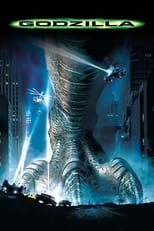
Godzilla
(1998)The most expensive failure in the franchise and the one every subsequent film has had to define itself against. Roland Emmerich had $130 million, the year's biggest marketing campaign and the tagline "Size Does Matter", and made a film in which the monster is a fast, thin, lizard that runs away from the army, burrows under Madison Square Garden and lays two hundred eggs, which the film then resolves with a Jurassic Park sequence in a sports arena. It has no atomic breath worth the name, no weight, and a script whose villains are film critics caricatured as the two men who reviewed Emmerich's previous films. It made $379.0 million and was still judged a disappointment. Toho's response was to retire the creature under a separate name, Zilla, and then to have Godzilla destroy it in one shot in Final Wars. Ranked last on what $130 million and a global franchise should have bought.
Free with ads on Plex
Your turn
That is our Godzilla ranking. Here is a blank one for yours.
All 38 Godzilla films, one tap each, S down to D. It saves as you go and it prints. No email, no signup.
Open your Godzilla tier sheetHow to Build Your Own Godzilla Tier List
The card above builds one from your taps and nothing else, no star ratings, and on a franchise this size that is the only method that produces a real answer. Thirty-eight films means 703 possible pairings, which nobody is going to sit through, so the card starts with the five this list calls the contenders and lets you fold in three more at a time for as deep as you want to go. Every one of those pairings is a live argument: is Shin Godzilla a masterpiece or ninety minutes of meetings? Is Godzilla vs. Kong the most fun film here or the shallowest?
Ratings cannot separate these, and the numbers show why. TMDB has Godzilla vs. Destoroyah at 7.78 and the 1954 original at 7.64, but the first of those was scored by 310 people and the second by 1,147, and Godzilla vs. Kong sits between them on 10,777 votes. Those are three different audiences, not three points on one scale. Shortlist ranks the whole run head-to-head, keeps the list current as the next one arrives, and gives every ranking a share link for the friend who insists the Showa films are unwatchable.
Read more about the comparison-based approach in our movie tier list guide.
Two different things get scored around this page. The S to D tiers above are editorial, and S means a film that held up rather than one that reviewed well on opening weekend. The score you see in the app is a different number: it is built from the head-to-head comparisons you make, scaled to 0 to 10, not from critic averages. How Shortlist scores work sets out the whole method.

This website uses TMDB and the TMDB APIs but is not endorsed, certified, or otherwise approved by TMDB.
What Order Should You Watch the Godzilla Movies In?
Not release order, and this is the one franchise on this site where that advice is genuinely wrong. Godzilla is not one continuity. It is four Japanese ones and two American ones, and most of them start by ignoring everything except the 1954 film. Watching all 38 in order means watching the series reboot itself from scratch five separate times, and 3,805 minutes is a little over 63 hours.
The five-film introduction, if you are starting cold. Godzilla (1954), Mothra vs. Godzilla (1964), The Return of Godzilla (1984), Shin Godzilla (2016) and Godzilla Minus One (2023). That is one film from each era, about 9 hours, and it is the version of this franchise that makes the case for it. If you only ever watch two, make them the first and the last.
By continuity, if you want to go deeper. The Showa run (1954 to 1975) is 15 films and only the 1954 original assumes you have seen anything. The Heisei run (1984 to 1995) is 7 films and is the one that genuinely rewards watching in order, because it is a single continuous story that begins with the 1984 reboot and ends with Godzilla dying. The Millennium run (1999 to 2004) is 6 films and almost every one of them is a standalone reboot; the exception is Godzilla Against MechaGodzilla and Godzilla: Tokyo S.O.S., which are a pair. Shin Godzilla and the anime trilogy are each their own separate thing. Godzilla Minus One starts a continuity of its own, and its direct sequel, Godzilla Minus Zero, opens in US theaters on November 6, 2026.
The American films are a fourth track. The 1998 Emmerich film connects to nothing. The MonsterVerse is four films in order: Godzilla (2014), Godzilla: King of the Monsters (2019), Godzilla vs. Kong (2021) and Godzilla x Kong: The New Empire (2024). Kong: Skull Island (2017) sits between the first two in that series and has no Godzilla in it, which is why it is not on this list.
Godzilla Minus Zero: Release Date, and What to Watch Before It
Godzilla Minus Zero opens in US theaters on November 6, 2026, three days after its Japanese release, and it is a direct sequel to Godzilla Minus One. Takashi Yamazaki wrote and directed both. The new film is set in 1949, two years after the first one ends, and Ryunosuke Kamiki and Minami Hamabe return as Koichi Shikishima and Noriko Oishi. According to Deadline, it is also the first Japanese production filmed for IMAX.
| Date | What happens |
|---|---|
| September 26, 2026 | Godzilla Minus Zero world premiere, the New York Film Festival |
| November 3, 2026 | Godzilla Minus Zero opens in Japan |
| November 6, 2026 | Godzilla Minus Zero opens in US theaters |
| March 26, 2027 | Godzilla x Kong: Supernova opens in US theaters (MonsterVerse, directed by Grant Sputore) |
What to watch first: one film. Godzilla Minus One (2023) runs 125 minutes and is the only thing the sequel builds on. No other Godzilla film connects to either of them, so the 37 others on this list are optional. That is rarer than it sounds: Godzilla Minus Zero is the first live-action Toho Godzilla film to continue an earlier one since Godzilla: Tokyo S.O.S. in 2003, 23 years earlier. Every Japanese live-action Godzilla film in between started from scratch.
Where it will rank. Not until it has been seen. It goes on this list the day it opens, and not the day it is announced. The bar it has to clear is its own predecessor, which sits at number 2 of 38 and in S tier on a budget of about $15 million. Godzilla x Kong: Supernova, the fifth MonsterVerse film with Godzilla in it, follows on March 26, 2027 under the same rule.
Godzilla Tier List FAQ
What is the best Godzilla movie?
The 1954 original, and the field is closer than it has been in seventy years. Ishiro Honda made it four months after the Lucky Dragon No. 5 crew was irradiated by a hydrogen bomb test at Bikini Atoll, and it plays as a disaster picture about fallout rather than a monster movie. The strongest modern case against it is Godzilla Minus One (2023), which took the Academy Award for Best Visual Effects on a budget of about $15 million and is the best film in the series since. TMDB's own highest score in the franchise actually belongs to Godzilla vs. Destoroyah at 7.78, but that is 310 votes from people who watched five sequels to get there.
How many Godzilla movies are there?
38 released films as of 2026: 33 Japanese ones (15 in the Showa run from 1954 to 1975, 7 in the Heisei run from 1984 to 1995, 6 in the Millennium run from 1999 to 2004, Shin Godzilla, the three-film Netflix anime trilogy and Godzilla Minus One) plus 5 American ones (the 1998 Roland Emmerich film and the four MonsterVerse pictures). Watching all 38 takes 3,805 minutes, a little over 63 hours. Godzilla Minus Zero opens in US theaters on November 6, 2026 and is not counted here because it has not been released.
What order should you watch the Godzilla movies in?
Not release order. Godzilla is not one continuity, it is four Japanese ones and two American ones, and almost every run begins by ignoring every film except the 1954 original. If you are starting cold, watch one from each era: Godzilla (1954), Mothra vs. Godzilla (1964), The Return of Godzilla (1984), Shin Godzilla (2016) and Godzilla Minus One (2023). That is about nine hours. The Heisei run of 1984 to 1995 is the only stretch that genuinely rewards watching in order, because it tells one continuous story that ends with Godzilla dying.
Do you need to watch the old Godzilla movies before Godzilla Minus One?
No. Godzilla Minus One is set in 1945 to 1947, in its own continuity, and no earlier Godzilla film connects to it. The same is true of Shin Godzilla (2016), the anime trilogy and every Millennium film except the Godzilla Against MechaGodzilla and Godzilla: Tokyo S.O.S. pair. The only run where order matters is Heisei, and the only film every other Godzilla film assumes you know is the 1954 original. The one film that continues Godzilla Minus One is its own direct sequel, Godzilla Minus Zero, in US theaters November 6, 2026.
When does Godzilla Minus Zero come out?
Godzilla Minus Zero opens in US theaters on November 6, 2026 and in Japan on November 3, 2026. It had its world premiere on September 26, 2026, at the New York Film Festival. Takashi Yamazaki wrote and directed it, as he did Godzilla Minus One (2023), and it runs 135 minutes. The next American Godzilla film after it is Godzilla x Kong: Supernova, in US theaters on March 26, 2027.
Is Godzilla Minus Zero a sequel to Godzilla Minus One?
Yes. Godzilla Minus Zero is set in 1949, two years after the events of Godzilla Minus One (2023), and Ryunosuke Kamiki and Minami Hamabe return as Koichi Shikishima and Noriko Oishi. It is the first live-action Toho Godzilla film to continue an earlier one since Godzilla: Tokyo S.O.S. (2003). Godzilla Minus One is the only film to watch before it: no other Godzilla film connects to either of them.
Is Godzilla Minus One connected to the MonsterVerse?
No. Godzilla Minus One is a Toho production made in Japan by Takashi Yamazaki and shares nothing with the American MonsterVerse. The MonsterVerse is a separate Legendary and Warner Bros. series of four Godzilla films, Godzilla (2014), Godzilla: King of the Monsters (2019), Godzilla vs. Kong (2021) and Godzilla x Kong: The New Empire (2024), plus Kong: Skull Island (2017), which has no Godzilla in it. The two series run in parallel and neither refers to the other.
Why is the 1998 Godzilla ranked last?
On what $130 million and a global franchise should have bought. Roland Emmerich's creature runs from the army rather than fighting it, has no meaningful atomic breath, burrows under Madison Square Garden and lays two hundred eggs, and the film resolves that with a Jurassic Park sequence in a sports arena. It made $379.0 million and was still treated as a disappointment. Toho's own verdict is on the record: the studio renamed the creature Zilla and then had Godzilla destroy it in a single shot in Godzilla: Final Wars (2004).
Are the Showa era Godzilla movies worth watching?
Some of them, and the good ones are very good. Mothra vs. Godzilla (1964) is the best film of the fifteen and the last one made for adults, Ghidorah, the Three-Headed Monster (1964) is where Godzilla stops being the villain, and Godzilla vs. Mechagodzilla (1974) is the best fight film of the run. After 1967 the budgets collapse and large parts of several films are stock footage, so All Monsters Attack (1969) and Godzilla vs. Megalon (1973) are for completists and for people watching them as comedy.
Which Godzilla movie is the highest grossing?
Godzilla x Kong: The New Empire (2024) at $571.8 million worldwide, ahead of Godzilla (2014) at $525.0 million and Godzilla vs. Kong (2021) at $470.1 million. The Japanese films operate at a completely different scale: Godzilla Minus One took $113.7 million and that made it the highest grossing Japanese live-action film ever released in the United States. By tickets sold in Japan, the record still belongs to King Kong vs. Godzilla (1962).
Related Tier Lists
The Reel
One sharp movie newsletter, every Tuesday
What to watch, what to skip, and where it lands on the rankings. Free, no spam, unsubscribe anytime.
Just want the tier sheet? Download it free, no email needed.
Rank the Godzilla films your way
Download Shortlist and build your own Godzilla tier list with head-to-head comparisons. It's free.


From The Reel
Recent posts on our blog that link to this list.