Tier List
Planet of the Apes Movies Ranked: All 10 Films (2026)
All 10 films, from the 1968 original to Kingdom of the Planet of the Apes, ranked from S-tier to D-tier. Then settle your own order with head-to-head comparisons.
The Complete Planet of the Apes Tier List
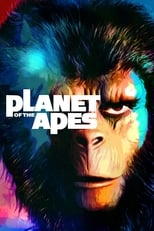
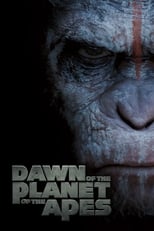


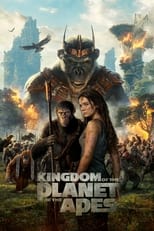

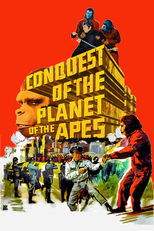


Ten films across fifty-six years, 1,126 minutes of running time, two separate continuities and one remake that belongs to neither. This franchise is unusual in that its best film is its first and its second best is its eighth, with a thirty-eight year gap between them and a period in the middle where the property was considered dead twice. That makes the ranking argument here different from most: it is not about which era you grew up with, because almost nobody grew up with all three. It is about whether a cheap, furious 1972 uprising picture outranks a beautiful $160 million one made in 2024. Here is every Planet of the Apes movie ranked into classic S/A/B/C/D tiers. Think Rise beats Dawn, or that Burton's remake deserves better than the bottom? Settle it yourself in minutes with Shortlist.
Each film below also says where to watch it in the US, checked October 7, 2026 (JustWatch). Rights move, so those lines disappear rather than guess once that check is over three weeks old.
Planet of the Apes
(1968)Still the one, fifty-eight years on, and the reason is not the twist everybody can quote. Rod Serling and Michael Wilson took Pierre Boulle's 1963 novel and turned it into an argument the film never stops having: Charlton Heston's Taylor arrives contemptuous of humanity, spends two hours being told by apes that his species is a savage animal, and is proved right in the last ninety seconds in the worst possible way. John Chambers' prosthetics won an honorary Academy Award and are the reason the ape society reads as a society rather than a costume party, because the actors can still act through them. Jerry Goldsmith's score is percussive, atonal and completely unlike anything a 1968 studio picture was supposed to sound like. It cost $5.8 million and made $32.6 million, and every sequel here is downstream of it, including the ones made forty years later.
Rent or buy only
Dawn of the Planet of the Apes
(2014)The best film the franchise has made since 1968 and the one that proved the reboot was not a fluke. Matt Reeves takes over and does the hardest possible thing with a blockbuster: he gives roughly half the running time to characters who mostly do not speak English, shoots long stretches in sign language with subtitles, and asks a summer audience to follow an argument between two apes about whether peace with humans is survivable. Toby Kebbell's Koba is the franchise's best villain because the film has already shown you the laboratory scars that made him, so his position is not evil, it is evidence. Andy Serkis gets the other half of it as a Caesar who is trying to be a statesman and is not sure he can be. It grossed $710.6 million, the highest of any film here, and it is the only entry that would work as a stage play.
Streaming on Hulu
Rank Planet of the Apes your way
Our top 5, head-to-head. Tap the one you prefer and we will build your order, then show you where you disagree with us.
The Reel
One sharp movie newsletter, every Tuesday
What to watch, what to skip, and where it lands on the rankings. Free, no spam, unsubscribe anytime.
Just want the tier sheet? Download it free, no email needed.
War for the Planet of the Apes
(2017)The most ambitious of the ten and the closest this series has come to art-house filmmaking on a $150 million budget. Reeves borrows openly from *Apocalypse Now* and *The Great Escape* and turns the third act into a prison-camp picture, with Woody Harrelson's Colonel as a Kurtz who has thought his own atrocity through and can explain it calmly. Serkis is extraordinary in it and the industry's inability to work out what to do with a performance-capture lead is the reason he was not nominated for anything. It is placed below *Dawn* for one reason: the film it wants to be is bleaker and slower than the story it has left to tell, and the final movement resolves on a note the previous film had already earned. $490.7 million, and the only entry here whose emotional climax is a title card.
Rent or buy only
Rise of the Planet of the Apes
(2011)The reboot nobody wanted, arriving ten years after Burton had apparently killed the property, and it works because it is small. James Franco's Alzheimer's researcher, a house in San Francisco, one ape raised as a son, and then a shelter, a fire hose and the single most famous word in the franchise since 1968. Andy Serkis and WETA had already done Gollum and King Kong; this is where performance capture stopped being a novelty and started being casting, because Caesar carries a film in which no other character is remotely as interesting. It cost $93 million and made $481.8 million. TMDB actually rates it a hair above *Dawn* and this list disagrees: *Rise* is a very good origin story, *Dawn* is a film about how societies decide to go to war.
Streaming on Hulu
Kingdom of the Planet of the Apes
(2024)Wes Ball restarts the clock several generations after Caesar, and the smartest thing in it is that Caesar has become scripture: the apes who quote him have never met him and a warlord is busy rewriting what he said. Owen Teague's Noa is a genuinely likeable lead, Kevin Durand's Proximus Caesar is having more fun than anyone else in the franchise, and the eagle sequences are the prettiest images in the series. What keeps it out of A is that it is a first act. At 145 minutes it is the longest film here and it spends most of them getting a young ape to the place where the story he is actually in can start, with Freya Allan's Mae carrying a reveal the film declines to resolve. $397.4 million, and a middle chapter is owed to it.
Streaming on Prime Video
Escape from the Planet of the Apes
(1971)The strangest film in the franchise and the best of the original sequels, because it inverts the premise instead of repeating it. Cornelius and Zira take Taylor's ship back through the same time warp and land in 1970s Los Angeles, where two talking chimpanzees become a media sensation, get fitted for suits, and are interviewed on chat shows. For an hour it is a comedy and it is genuinely funny. Then the government works out what their existence implies about the future and the film turns into one of the bleakest things Fox released that decade. Roddy McDowall and Kim Hunter are the reason it lands: they had played these two under the makeup for two films already and they play the third one as a marriage. Made for $2.5 million, and it is where the series' time loop actually closes.
Rent or buy only
Conquest of the Planet of the Apes
(1972)The angriest film here and the one most obviously made in 1972. Caesar, the child of Cornelius and Zira, grows up in a North America that has replaced its dead pets with enslaved apes, and the film is an uprising picture shot on a corporate plaza in Century City with $1.7 million and a lot of nerve. Roddy McDowall is playing a different character from the one he played three times before and the switch works. It is held back by the budget in ways the earlier sequels are not, the future city is visibly a shopping centre, and by the studio, which forced a softer ending onto the theatrical cut after previews went badly; the unrated cut restores the version the film had been arguing for the whole time. Rent that one if you can find it. As released, it is a great forty minutes attached to a compromised twenty.
Streaming on IndieFlix
Beneath the Planet of the Apes
(1970)The sequel that had to exist and could not work out why. Heston agreed to return only briefly and only on the condition that his character be killed off, so James Franciscus plays a second astronaut doing a compressed version of the first film's discoveries while the plot waits for Heston to come back. The mutants are the interesting half: a telepathic underground cult in the ruins of New York worshipping an unexploded doomsday bomb, which is a genuinely nasty idea and is shot like a fever dream. The problem is the ending, which does not develop the first film so much as delete it, destroying the entire planet in the final shot so that nothing can follow. Three films followed anyway. $19.0 million on a $3 million budget, and it is the reason the series had to invent time travel.
Rent or buy only
Planet of the Apes
(2001)The most expensive film here at $100 million and the most frustrating, because half of it is superb. Rick Baker's makeup is better than the 1968 work by any technical measure, Tim Roth's Thade is a real performance of real menace, and the ape city and the cavalry charge are exactly what a 2001 blockbuster remake should look like. Everything human is inert. Mark Wahlberg is asked to play a man with no interior life and does, the film has no argument about anything, and the closing scene, a Lincoln Memorial with Thade's face on it, is a twist assembled backwards from the reputation of a better ending. It made $362.2 million and got no sequel, which tells you how the audience felt on the way out. Ranked here on what the money bought, not on the craft, which is genuinely good.
Streaming on Hulu
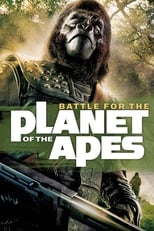
Battle for the Planet of the Apes
(1973)The end of the original run and the only film here that feels like it was finished because a contract said so. It cost $1.7 million, roughly a fifth of the first film in real terms, and every frame shows it: a handful of sets, a mutant army with no scale, and a climactic battle in which the stakes are explained rather than staged. The idea underneath it is not bad, Caesar trying to build a society that does not repeat the one he overthrew, and John Huston turns up as the Lawgiver to frame the whole saga as a story told to children centuries later, which is a lovely idea in a film that cannot afford it. It grossed $8.8 million, the lowest of the ten. Worth watching once, to see a series that started with the Statue of Liberty end with a statue crying, and then stop.
Rent or buy only
Your turn
That is our Planet of the Apes ranking. Here is a blank one for yours.
All 10 Planet of the Apes films, one tap each, S down to D. It saves as you go and it prints. No email, no signup.
Open your Planet of the Apes tier sheetHow to Build Your Own Planet of the Apes Tier List
The card above builds one from your taps and nothing else, no star ratings, and on this franchise that gap matters more than usual. Ratings flatten these ten into two clumps: four films between 7.0 and 7.7 and six between 5.6 and 6.4, which tells you almost nothing, because the interesting disagreements happen inside the clumps. Is the 1971 body-swap comedy that turns into a tragedy better than the 1972 uprising that the studio recut? Would you rather rewatch the bridge in Dawn or the camp in War? A head-to-head forces an answer in about a second, and it is often not the one the scores predicted.
There are ten of them and they were made by eight different directors across three distinct attempts at the same idea. Shortlist ranks the whole run head-to-head, keeps the list current as the next one arrives, and gives every ranking a share link for the friend who still defends the 2001 ending.
Read more about the comparison-based approach in our movie tier list guide.
Two different things get scored around this page. The S to D tiers above are editorial, and S means a film that held up rather than one that reviewed well on opening weekend. The score you see in the app is a different number: it is built from the head-to-head comparisons you make, scaled to 0 to 10, not from critic averages. How Shortlist scores work sets out the whole method.

This website uses TMDB and the TMDB APIs but is not endorsed, certified, or otherwise approved by TMDB.
What Order Should You Watch the Planet of the Apes Movies In?
Release order, and here that is a real recommendation rather than a default. This franchise has two continuities and one orphan. The five original films run 1968 to 1973 as a closed loop, the four reboot films run 2011 to 2024 as a straight line, and Tim Burton's 2001 remake connects to neither and can be watched at any point or not at all. Nothing in the reboot requires the originals, and nothing in the originals is spoiled by the reboot, so both halves work as standalone runs.
Planet of the Apes (1968), Beneath the Planet of the Apes (1970), Escape from the Planet of the Apes (1971), Conquest of the Planet of the Apes (1972), Battle for the Planet of the Apes (1973), Planet of the Apes (2001), Rise of the Planet of the Apes (2011), Dawn of the Planet of the Apes (2014), War for the Planet of the Apes (2017), Kingdom of the Planet of the Apes (2024). That is 1,126 minutes, about 18 hours and 46 minutes.
Chronological order is a trap on the original five. The 1968 film is set roughly two thousand years in the future. Escape sends two of its characters back to the 1970s, Conquest is set in 1991 and Battle some years after that, so a strictly chronological run puts the third, fourth and fifth films first and destroys the reveal the first one is built on. Watch them as they came out. The loop is the point, and it only closes if you meet it in the order the filmmakers did.
The short route, if ten is too many. Start with Planet of the Apes (1968), then jump straight to Rise, Dawn and War. That is 487 minutes, just over eight hours, and it is the strongest version of this franchise: the film that invented it and the trilogy that took the premise seriously again. Add Kingdom if you want to see where it goes next, and Escape if you want the one weird gem in the original run.
Planet of the Apes Tier List FAQ
What is the best Planet of the Apes movie?
The 1968 original, and it is still not close. Rod Serling and Michael Wilson turned Pierre Boulle's novel into a two hour argument about whether humanity deserves the planet, John Chambers' prosthetics won an honorary Academy Award and let the actors act through them, and Jerry Goldsmith wrote a score no 1968 studio picture was supposed to sound like. The strongest case against it is Dawn of the Planet of the Apes (2014), which is the best modern entry and the highest grossing film in the franchise at $710.6 million.
How many Planet of the Apes movies are there?
10 released films: the five originals from Planet of the Apes (1968) to Battle for the Planet of the Apes (1973), Tim Burton's standalone remake in 2001, and the four reboot films from Rise (2011) to Kingdom of the Planet of the Apes (2024). Two of them are titled simply Planet of the Apes, which is why this list shows the year next to those. Watching all ten takes 1,126 minutes, about 18 hours and 46 minutes.
What order should you watch the Planet of the Apes movies in?
Release order. The franchise is two continuities plus one orphan: the original five run 1968 to 1973 as a closed time loop, the reboot four run 2011 to 2024 as a straight line, and the 2001 remake connects to neither. Nothing in the reboot requires the originals and nothing in the originals is spoiled by the reboot, so each half also works on its own.
Do you need to watch the old Planet of the Apes movies first?
No. Rise of the Planet of the Apes (2011) is a complete restart with no shared characters, no shared timeline and no callbacks you need to have earned. You can begin there and watch four films in a row. The one thing the originals give you is the ending of the 1968 film, which is the idea the entire franchise is a variation on, so watch that one first if you are only watching one old film.
Should you watch the Planet of the Apes movies in chronological order?
No, and this is the rare franchise where chronological order actively ruins it. The 1968 film is set about two thousand years in the future; Escape (1971) sends two of its characters back to the 1970s, Conquest is set in 1991 and Battle some years later. Ordering by in-story date puts the third, fourth and fifth films first and gives away the reveal the first one is built on.
Is the 2001 Planet of the Apes remake worth watching?
Only as a curiosity. Rick Baker's makeup is technically better than the 1968 work and Tim Roth is genuinely menacing as Thade, but the film has no argument about anything, its human lead is given no interior life, and its closing twist is assembled backwards from the reputation of a better ending. It made $362.2 million and got no sequel, which is the audience's own verdict. It connects to no other film here, so skipping it costs you nothing.
Which Planet of the Apes trilogy is the best one?
The reboot trilogy: Rise (2011), Dawn (2014) and War (2017), 375 minutes in total. It is the only run in the franchise where the quality goes up and stays up, and Andy Serkis' Caesar carries all three as a single performance across sixteen years of story. Kingdom of the Planet of the Apes (2024) continues that world several generations later and is good, but it is a first act rather than a fourth chapter.
Related Tier Lists
The Reel
One sharp movie newsletter, every Tuesday
What to watch, what to skip, and where it lands on the rankings. Free, no spam, unsubscribe anytime.
Just want the tier sheet? Download it free, no email needed.
Rank the Planet of the Apes films your way
Download Shortlist and build your own Planet of the Apes tier list with head-to-head comparisons. It's free.