Tier List
Halloween Movies Ranked: Complete Tier List (2026)
All 13 films, from Carpenter's $325,000 original in 1978 to Halloween Ends, ranked from S-tier to D-tier. Then settle your own order with head-to-head comparisons.
The Complete Halloween Tier List
Thirteen films across forty-four years, $136 million of budget between them and about $886 million back, and no two people agree on how many of them actually happened. This is the only major horror franchise with five separate continuities, three of which begin by deleting a film you already watched, and it is the reason a Halloween ranking argument goes differently than a Friday the 13th one: you are not just ranking quality, you are choosing which version of the story you accept. Here is every Halloween movie ranked into classic S/A/B/C/D tiers, including Season of the Witch and both Rob Zombie films. Think H20 is the real number two, or that Halloween II from 2009 is the misunderstood one? Settle it yourself in minutes with Shortlist.
Each film below also says where to watch it in the US, checked October 7, 2026 (JustWatch). Rights move, so those lines disappear rather than guess once that check is over three weeks old.
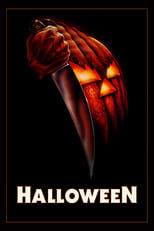
Halloween
(1978)The original, and it is not a close call in either direction: nothing else here is within reach of it, and very little else in the genre is either. John Carpenter shot it for $325,000 in twenty days on Panavision equipment he could barely afford, and it made $70 million, which is the entire reason the other twelve exist. What holds up is the restraint. There is almost no gore in it. Michael stands in the background of shots the camera has not told you to look at, the widescreen frame leaves empty space on both sides of Laurie for ninety minutes, and Carpenter's own score does the work that a body count does in everything that copied it. Watch it again and count how often the film shows you the killer before a character sees him. That gap is the whole movie.
Streaming on AMC+, Shudder and Cultpix
Rank Halloween your way
Our top 5, head-to-head. Tap the one you prefer and we will build your order, then show you where you disagree with us.
The Reel
One sharp movie newsletter, every Tuesday
What to watch, what to skip, and where it lands on the rankings. Free, no spam, unsubscribe anytime.
Just want the tier sheet? Download it free, no email needed.
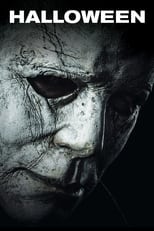
Halloween
(2018)The best sequel by a wide margin and the only one that found a genuinely new idea after forty years, which was to take the trauma seriously. David Gordon Green throws out every sequel before it, including the sister reveal that had driven the plot since 1981, and asks what forty years of waiting does to a person. Jamie Lee Curtis plays Laurie as somebody who has been correct the whole time and lost everything anyway, which is a harder and sadder performance than the part needed. Carpenter came back to score it with his son and Daniel Davies, and the new theme is the only music in the franchise that earns a place next to the original. It made $260 million on a $10 million budget, the most of any film in the franchise, and the middle act sags, but the last twenty minutes in the reinforced house is the best set piece in any sequel here.
Streaming on Peacock
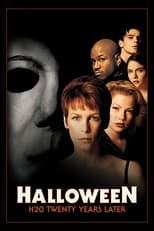
Halloween H20: 20 Years Later
(1998)The other good sequel, and the one that proved the trick would work before 2018 ran it again with more money. Steve Miner also skips a chunk of the continuity, hands Laurie a new name and a private school in California, and gets the best Jamie Lee Curtis performance of the pre-Blumhouse run out of it: a woman with a teenage son, a drinking problem and an anniversary she cannot survive quietly. It is a post-Scream slasher and it moves like one, tight at 86 minutes with the self-aware edges of its moment, but the ending is the only time in twenty years the series let Laurie stop running. It should have been the last one. It was not, and the next film opens by undoing it in a hallway.
Streaming on HBO Max
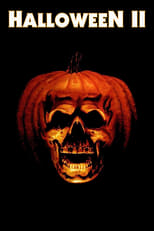
Halloween II
(1981)Picks up in the same second the first one ends and follows Laurie to the hospital, which is a genuinely good instinct: one continuous night, the corridors emptying out, nobody left awake. Carpenter co-wrote and reshot parts of it but did not direct, and the difference is visible in about a minute. Rick Rosenthal keeps the geography but loses the patience, so the empty frames fill up with kills and the film reaches for a needle, a scalpel and a hot tub because it does not trust the waiting anymore. It also introduces the sister twist, which explained a killer whose whole power was that he had no reason. Two films later, that decision is running the entire series.
Streaming on Prime Video, Peacock and AMC+
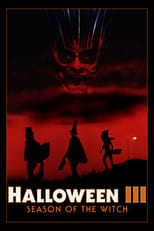
Halloween III: Season of the Witch
(1982)The one with no Michael Myers, and the one whose reputation has moved the furthest. Carpenter and Debra Hill wanted an anthology series releasing a different horror film under this title every October, and this was the pilot for that idea: an Irish mask company, a stolen piece of Stonehenge, and a television jingle counting children down to a broadcast that kills them. Audiences in 1982 wanted the man in the mask and told the studio so, and the anthology died on the spot. Watched now with nothing to be disappointed by, it is strange, mean, genuinely apocalyptic and better made than five of the sequels that followed it. It is in B rather than A because the plot is nonsense and the lead is a charmless drunk, not because it lacks a Myers.
Streaming on Prime Video, Peacock and AMC+
Halloween 4: The Return of Michael Myers
(1988)Six years after the anthology failed, the studio brought back the mask, and this is a much more competent film than a fourth entry has any right to be. Dwight H. Little shoots the small-town Illinois autumn properly, Donald Pleasence gets to play Loomis as a burned man rather than a plot device, and the decision to make the target a ten-year-old girl gives the chase a real weight. Danielle Harris is the best child performance in the franchise. Where it falls short of the first two is the mask itself, which looks wrong in every scene it appears in, and a structure that is mostly rooftop and truck chase. The final shot is the boldest ending in the series, and the next film spends its opening minutes throwing it away.
Streaming on AMC and Shudder
Halloween
(2007)Rob Zombie's remake, and the most interesting failure here. The idea is defensible: stop treating Michael as a force of nature and show the boy who became him. The first half hour does exactly that, in a grimy, hostile, well-acted register that no other film in this series has attempted, and Zombie is a real filmmaker with a real eye for that kind of squalor. Then the second half arrives and has to redo the 1978 plot in forty minutes, so it sprints through Laurie, Annie, Lynda and Loomis in the time the original spent on one walk home. Explaining Michael also costs the thing that made him frightening. It made $80 million, more than any Halloween film before it, and it split the audience permanently.
Streaming on Peacock and AMC
Halloween Kills
(2021)The middle chapter of the Blumhouse trilogy and it behaves exactly like one: it is all rising action and no film. Laurie spends almost the entire runtime in a hospital bed while the town organises itself into a mob, which is a real idea about how communities turn ugly under fear, and it is stated aloud roughly eleven times. What it does have is the best staged violence in the franchise by a distance, a genuinely upsetting fire station sequence, and an extended 1978 flashback that is better than most of the present-day scenes around it. Watched in one sitting between the other two it plays fine. Watched alone it is ninety minutes of people shouting a slogan.
Streaming on Peacock
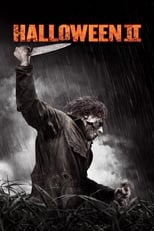
Halloween II
(2009)Zombie's second, and the one his defenders will tell you is his real film, with some justification. He stops remaking anything, throws out the polish, and makes a grim, hallucinatory movie about two damaged people falling apart in parallel: Laurie coming undone in a stranger's house, Michael as a filthy drifter in a barn following a white horse and his dead mother. Scout Taylor-Compton is much better here than she was allowed to be in 2007. It is also ugly on purpose in a way that gets tiring, the dream logic is a licence to make nothing add up, and audiences stayed away: it made $39 million, less than half of the $80 million the remake took two years earlier. Genuinely the most divisive film on this list, and it is closer to a B than the number next to it suggests.
Streaming on Peacock and AMC+
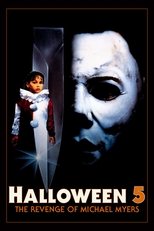
Halloween 5: The Revenge of Michael Myers
(1989)Released twelve months after the fourth film and it shows in every department. It opens by undoing the previous ending in the first three minutes, gives Michael a psychic link to a child who now cannot speak, and introduces a man in black and a tattoo that the film never explains because nobody had decided what they meant yet. Donald Pleasence is visibly stranded. There is one good sequence in a laundry chute and a genuinely creepy scene with a boy in a Myers costume, and around them is a film assembled from a script that was reportedly unfinished when shooting started. This is the point where the series stopped being about anything.
Streaming on AMC+, AMC and Shudder
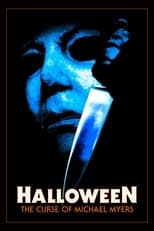
Halloween: The Curse of Michael Myers
(1995)The film that had to explain the tattoo, and the answer is a druid cult called Thorn that has been directing Michael all along, which retroactively removes the only thing that ever worked about him. Six years of development and two competing cuts left it incoherent in either version: the theatrical release and the Producer's Cut have different endings, different scenes and different explanations. Donald Pleasence died shortly after filming and his last scenes are hard to watch for reasons the film did not intend. Paul Rudd is in it, in his first major role, playing a grown-up Tommy Doyle as an unsettling man with a corkboard. It is the last film of the original continuity and it buries it.
Streaming on HBO Max
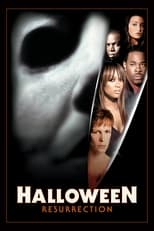
Halloween: Resurrection
(2002)Opens by explaining that the man Laurie decapitated at the end of H20 was a paramedic in the mask, kills her off in the first ten minutes, and then hands the franchise to an internet reality show streaming from the Myers house with Busta Rhymes as the producer. Every one of those sentences is true. The webcast idea is a real 2002 artifact and there is a version of it that works as satire, but the film plays it straight, lights everything in night-vision green, and ends with a kung fu fight in a garage. It undid the best ending the series had, and it stopped the franchise dead for five years.
Streaming on HBO Max
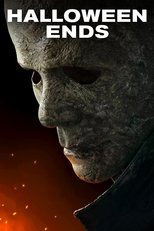
Halloween Ends
(2022)The most disliked film in the franchise and the only one that got there by trying something. It skips four years, sidelines Michael almost entirely, and spends most of its runtime on a new character, a young man blamed by the town for an accidental death, who is corrupted into becoming the next thing in the mask. As an argument about a town needing a monster it is coherent. As the ending of a six-film Laurie Strode story it is a bait and switch, and audiences who had waited through Kills for a confrontation got a different movie instead. Curtis and the final sequence are good. It is ranked here because it is the third act of a trilogy that promised one thing and delivered another, which is a worse failure than being merely dull.
Streaming on Netflix
Your turn
That is our Halloween ranking. Here is a blank one for yours.
All 13 Halloween films, one tap each, S down to D. It saves as you go and it prints. No email, no signup.
Open your Halloween tier sheetHalloween Box Office: What Every Film Cost and Made
The 13 Halloween films cost $136 million combined and grossed about $886 million worldwide, and the biggest of them is Halloween (2018) at $260 million. The 3 Blumhouse films made $499 million between them, more than the other 10 combined ($387 million). The smallest gross belongs to Halloween 5: The Revenge of Michael Myers (1989) at $12 million. Every film in the series grossed at least 2.90x its budget, and the weakest return on that measure is Halloween: Resurrection (2002).
Money and quality barely line up in this franchise. The 1978 original is only 6th of 13 by gross, yet it returned 216.19x its $325,000 budget, the best return in the series by a wide margin. Halloween Ends is D tier and the 3rd-highest-grossing film of the 13, because it arrived as the final chapter of a trilogy audiences had already committed to. Box office measures how many people bought a ticket before they had seen the film, which is exactly what a ranking cannot use.
| Film | Budget | Worldwide | Return | Tier |
|---|---|---|---|---|
| Halloween2018 | $10M | $260M | 25.99x | A |
| Halloween Kills2021 | $20M | $133M | 6.67x | C |
| Halloween Ends2022 | $33M | $105M | 3.19x | D |
| Halloween2007 | $15M | $80M | 5.36x | C |
| Halloween H20: 20 Years Later1998 | $17M | $75M | 4.41x | A |
| Halloween1978 | $325K | $70M | 216.19x | S |
| Halloween II2009 | $10M | $39M | 3.94x | C |
| Halloween: Resurrection2002 | $13M | $38M | 2.90x | D |
| Halloween II1981 | $2.5M | $26M | 10.21x | B |
| Halloween 4: The Return of Michael Myers1988 | $5M | $18M | 3.55x | B |
| Halloween: The Curse of Michael Myers1995 | $5M | $15M | 3.02x | D |
| Halloween III: Season of the Witch1982 | $2.5M | $14M | 5.76x | B |
| Halloween 5: The Revenge of Michael Myers1989 | $3M | $12M | 3.88x | D |
How to Build Your Own Halloween Tier List
The card above builds one from your taps and nothing else, no star ratings, which matters more on this franchise than on almost any other. Three of these films are called Halloween and two are called Halloween II, so a numeric rating is not even a stable way to refer to them, and eight of the thirteen sit within a point of each other on every rating site there is. A head-to-head refuses that. Asking yourself whether you would honestly rather rewatch the 1981 sequel or the 2018 one gets an answer in about a second, and it is usually not the one the scores predicted.
There are thirteen, and the argument is almost never about the first one. Shortlist ranks the whole run head-to-head, keeps the list current as the next one arrives, and gives every ranking a share link for whoever still insists Season of the Witch does not count.
Read more about the comparison-based approach in our movie tier list guide.
Two different things get scored around this page. The S to D tiers above are editorial, and S means a film that held up rather than one that reviewed well on opening weekend. The score you see in the app is a different number: it is built from the head-to-head comparisons you make, scaled to 0 to 10, not from critic averages. How Shortlist scores work sets out the whole method.

This website uses TMDB and the TMDB APIs but is not endorsed, certified, or otherwise approved by TMDB.
What Order Should You Watch the Halloween Movies In?
There is no single release order that works, and that is not a nitpick. Five of these films are direct sequels to the 1978 original that ignore each other, so watching all thirteen in release order means being told three separate times that something you just watched did not happen. Pick a timeline instead.
The original timeline (five films). Halloween (1978), Halloween II (1981), Halloween 4 (1988), Halloween 5 (1989), Halloween: The Curse of Michael Myers (1995). This is the continuous story, sister reveal and druid cult included. It is also the one that ends worst.
The H20 timeline (four films). Halloween (1978), Halloween II (1981), Halloween H20 (1998), Halloween: Resurrection (2002). Skips 4, 5 and Curse entirely. Stop after H20 and this is the most satisfying route through the franchise there is.
The Blumhouse timeline (four films). Halloween (1978), Halloween (2018), Halloween Kills (2021), Halloween Ends (2022). Deletes every sequel including the sister twist. This is the shortest complete version of the story and the one most new viewers should start with.
The Rob Zombie films (two). Halloween (2007) and Halloween II (2009) are a self-contained remake and its sequel. They connect to nothing else and can be watched at any point, or not at all.
Where Season of the Witch goes. Anywhere. Halloween III (1982) has no Michael Myers in it and belongs to no timeline, which is exactly what it was designed to do. Watch it on its own in October and judge it as its own film.
The short route, if thirteen is too many. Halloween (1978), then Halloween II (1981), then H20, then Halloween (2018). That is the original, the one that finishes its night, and the two best attempts at giving Laurie Strode an ending. It runs about six hours and you can stop there without feeling like you missed a film.
Is There a New Halloween Movie Coming?
Not one with a release date. As of September 21, 2026, no fourteenth Halloween film has been dated, so this list stays at 13. What is on the record: in October 2023, Miramax won the franchise's television rights from Trancas International Films, the company run by Malek Akkad that controls it, with a plan for a series that could launch a wider Halloween universe (Deadline). What is only reported: since April 2026, horror outlets have said that series was set aside for a full theatrical reboot aimed at 2028, the fiftieth anniversary of the 1978 original. Miramax has not confirmed it (Dark Horizons). A reboot would be the franchise's sixth continuity.
Halloween Tier List FAQ
What is the best Halloween movie?
The original Halloween (1978), and nothing else in the franchise is close. John Carpenter made it for $325,000 in twenty days and it works on restraint rather than gore: Michael is placed in the background of shots the camera has not told you to look at, and the widescreen frame leaves empty space around Laurie for ninety minutes. The strongest counter-argument is Halloween (2018), which is the best sequel by a wide margin and the only one that found a new idea, which was to take forty years of trauma seriously.
How many Halloween movies are there?
13 released theatrical films, from Halloween (1978) to Halloween Ends (2022). That count includes Halloween III: Season of the Witch (1982), which has no Michael Myers in it, and both Rob Zombie films (2007 and 2009), which live in a separate TMDB collection and are missing from a lot of lists for exactly that reason. Television cuts and documentaries are not ranked here.
What order should you watch the Halloween movies in?
Pick a timeline rather than a release order, because five of these films are direct sequels to the 1978 original that ignore each other. The original timeline is 1978, Halloween II (1981), 4, 5 and Curse. The H20 timeline is 1978, Halloween II (1981), H20, Resurrection. The Blumhouse timeline is 1978, Halloween (2018), Kills, Ends, and it is the shortest complete version for a new viewer. The two Zombie films stand alone, and so does Season of the Witch.
How many Halloween timelines are there?
Five. The original continuity (five films), the H20 continuity that skips 4, 5 and Curse (four films), the Blumhouse continuity that skips everything after 1978 including the sister twist (four films), the Rob Zombie remake continuity (two films), and Halloween III, which belongs to none of them. This is the only major horror franchise where ranking the films also means choosing which version of the story you accept.
Why is there no Michael Myers in Halloween III?
Because Carpenter and Debra Hill never wanted a Michael Myers series. The plan was an anthology releasing a different horror film under the Halloween title every October, and Season of the Witch (1982) was the pilot for it: an Irish mask company, a stolen piece of Stonehenge, and a television jingle counting children down. Audiences in 1982 wanted the man in the mask and the anthology idea died immediately. Its reputation has moved further than any other film in the franchise, and watched now with nothing to be disappointed by it is better made than several of the sequels that followed.
Are the Rob Zombie Halloween movies canon?
They are their own canon. Halloween (2007) is a full remake with a new backstory rather than a sequel, and Halloween II (2009) continues only from it. They connect to no other film here, which is why they can be watched at any point or skipped. They are also the most divisive entries: the 2007 film made $80 million, more than any Halloween film before it, and split the audience permanently over whether explaining Michael was worth doing at all.
Which Halloween sequel is the most underrated?
Halloween II (2009), the second Rob Zombie film, and its defenders have a real case. He stops remaking anything and makes a grim, hallucinatory film about two damaged people coming apart in parallel, with Michael as a filthy drifter rather than a shape. It made $39 million worldwide, less than half of the $80 million the 2007 remake took, and it sits in C tier here, but it is closer to B than the number next to it suggests. The mainstream answer is H20 (1998), which is genuinely good and gets forgotten because the film after it undid the ending.
Which Halloween movie made the most money?
Halloween (2018), the David Gordon Green film, which grossed $260 million worldwide on a $10 million budget, 25.99x its cost. The next biggest is its sequel Halloween Kills (2021) at $133 million. The lowest-grossing of the 13 Halloween films is Halloween 5: The Revenge of Michael Myers (1989) at $12 million. The best return belongs to John Carpenter's original Halloween (1978), which made $70 million from $325,000. Figures are TMDB worldwide grosses read September 21, 2026, not adjusted for inflation.
Is there a new Halloween movie coming out?
No new Halloween film has a release date as of September 21, 2026, so the franchise stands at 13 released films ending with Halloween Ends (2022). In October 2023, Miramax won the franchise's television rights from Trancas International Films and planned a series. Since April 2026, horror outlets have reported that the series was set aside for a full theatrical reboot aimed at 2028, the fiftieth anniversary of John Carpenter's 1978 original. Miramax has not confirmed that film.
Related Tier Lists
The Reel
One sharp movie newsletter, every Tuesday
What to watch, what to skip, and where it lands on the rankings. Free, no spam, unsubscribe anytime.
Just want the tier sheet? Download it free, no email needed.
Rank the Halloween films your way
Download Shortlist and build your own Halloween tier list with head-to-head comparisons. It's free.


From The Reel
Recent posts on our blog that link to this list.