Tier List
Saw Movies Ranked and in Order: Tier List (2026)
All 10 films, from the $1.2 million original in 2004 to Saw X, ranked from S-tier to D-tier. Plus the order to watch them in, and how to settle your own with head-to-head comparisons.
The Complete Saw Tier List






Ten films, $107 million of budget between them and more than $1.1 billion back, which makes this the most profitable horror franchise per dollar spent that anyone has run this long. It is also the one where the quality curve refuses to behave. Most franchises decline in a straight line. Saw peaked at the start, sank for six years, produced its sharpest sequel at number six, released its worst film as a farewell, came back twice, and then made its second-best entry nineteen years after the first. Here is every Saw movie ranked into classic S/A/B/C/D tiers. Think Saw X is the real number one, or that Saw VI is being underrated again? Settle it yourself in minutes with Shortlist.
Each film below also says where to watch it in the US, checked October 7, 2026 (JustWatch). Rights move, so those lines disappear rather than guess once that check is over three weeks old.
Saw
(2004)Still the best one, and the gap is not close. James Wan's debut cost $1.2 million, was shot in eighteen days on a schedule that shows in every frame, and made $104 million, which is the entire reason the other nine exist. It is not really a gore film: two men chained in a bathroom talking, cut against a police procedural, with the traps kept mostly at the edges of the story. What holds up is the construction. Every piece of information the ending needs is handed to you early and disguised as something else, and the last shot is the rare twist that makes the previous ninety minutes better rather than cheaper. Watch it again knowing the answer and it plays completely differently.
Streaming on Peacock
Saw X
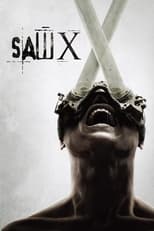
(2023)The best-reviewed film in the series by a wide margin and the one that finally solved a problem the sequels spent nineteen years working around: it makes John Kramer the protagonist instead of a corpse in flashback. Kevin Greutert sets it between the first two films, in Mexico, around a fake cancer clinic, and the setup takes almost an hour before a single trap goes off. That hour is the point. Tobin Bell is genuinely excellent, Shawnee Smith gets her best material since Saw III, and for once the audience is invited to want the traps to happen, which is a nastier trick than any of the devices in it. If you bounced off this franchise after the fourth film, this is the one to come back for.
Streaming on Netflix
Rank Saw your way
Our top 5, head-to-head. Tap the one you prefer and we will build your order, then show you where you disagree with us.
The Reel
One sharp movie newsletter, every Tuesday
What to watch, what to skip, and where it lands on the rankings. Free, no spam, unsubscribe anytime.
Just want the tier sheet? Download it free, no email needed.
Saw II
(2005)The sequel that invented the format the rest of the series runs on: a house full of strangers, a nerve-gas clock, and a trap in every room. Darren Lynn Bousman shot it fast and it looks it, but the central idea is strong enough to carry the grime, and the needle pit remains the single most upsetting minute in the whole run. Donnie Wahlberg is good in a part that is mostly shouting at a television. It also does the difficult sequel job properly by giving Jigsaw a philosophy rather than just more machines, and Tobin Bell talking to a detective across a desk for twenty minutes is better than anything with a saw in it.
Free with ads on Fawesome
Saw VI
(2009)The best of the late run and the only one with something on its mind. Greutert points the whole film at a health insurance executive who denies claims by formula, which turns the series' pretend morality into actual satire for ninety minutes and gives the traps a target worth having. The carousel sequence is the most coherent set piece after the first film. It also made the least money of any entry, which is why the series pivoted immediately to a 3D finale and why the people who like Saw VI like it so loudly. Ranked here rather than in S because it is the sixth chapter of a plot that had become unfollowable by then and it does not try to fix that.
Rent or buy only
Saw III
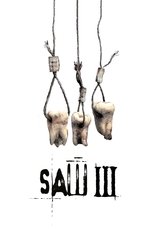
(2006)The most brutal one, and the only sequel that lands an ending. It closes Amanda's story properly, gives Tobin Bell an actual death scene rather than an off-screen exit, and Shawnee Smith is the best performer in the series playing someone who has understood the philosophy and cannot live inside it. What keeps it out of A is everything around that: the rack, the pig vat and the surgery are staged to make you look away rather than to make you nervous, and the parallel plot about the grieving father is a structure the film does not need. This is the exact point where the series stopped being a thriller with traps in it.
Rent or buy only
Saw IV
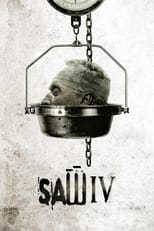
(2007)The one that runs at the same time as the third film, which is a genuinely interesting thing for a horror sequel to attempt and is also why nobody can explain the plot of this series afterwards. Bousman's third and last of the original run gives Jigsaw a backstory, a wife and a reason, and the flashbacks are the good half. The present-day half is a detective walking between rooms. It is competently made and completely airless, and its ending is the first twist here that exists to set up another film rather than to reframe this one.
Rent or buy only
Saw V
(2008)David Hackl's only film in the chair, and the one where the series is visibly running on procedure. Half of it is Hoffman covering his tracks, which is a plot about paperwork, and the other half is five strangers in a basement working through traps that are solvable only by cooperating, an idea the film explains three separate times in case you missed it. The five-person arm trap is a good scene. Everything holding it together is a long argument between two people you have no reason to care about, and it is the entry most likely to make a first-time viewer stop.
Rent or buy only
Jigsaw
(2017)A soft reboot seven years after the supposed finale, made by the Spierig brothers, and it is the most professional-looking film in the series and the least interesting. It is brighter, cleaner and better shot than anything before it, which turns out to be the problem: Saw was grimy, hand-held and cheap, and losing that costs more than the polish gains. The barn setting is a good idea. The twist is another timeline trick, the fourth one here, and by this point the audience has been trained to expect it, so the reveal lands as a shrug rather than a shock.
Rent or buy only
Saw 3D
(2010)Sold as the final chapter and shot as a highlight reel. Greutert made it under protest after being pulled back from another job, the 3D pushes every trap into the front of frame for a format gimmick that dates it worse than the gore, and the opening scene in a public shopping mall abandons the last of the claustrophobia the series was built on. Cary Elwes returns for the closing reveal, and it is the only thing here anyone remembers. Also released as Saw: The Final Chapter, and it was neither the final chapter nor much of a chapter.
Rent or buy only
Spiral: From the Book of Saw
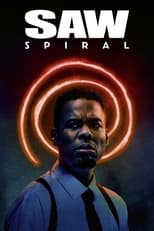
(2021)A copycat-killer police thriller with Chris Rock and Samuel L. Jackson that carries the branding and almost none of the machinery. Rock is not miscast in the way people expected, and the ambition is real: Bousman came back to make a corrupt-cop movie in a series about moral tests, which could have worked. It does not, because the traps are perfunctory, the mystery has exactly one suspect, and the film keeps stopping so someone can explain police corruption to you. It is the lowest-grossing entry by a distance and the only one that feels like it was made from the outside.
Streaming on Hulu
Your turn
That is our Saw ranking. Here is a blank one for yours.
All 10 Saw films, one tap each, S down to D. It saves as you go and it prints. No email, no signup.
Open your Saw tier sheetHow to Build Your Own Saw Tier List
The card above builds one from your taps and nothing else, no star ratings, which matters more here than on almost any other franchise. Eight of these ten films sit inside a point of each other on every rating site there is, because a star rating is really a verdict on the genre, and anybody rating a Saw sequel three out of five has stopped distinguishing between them. A head-to-head refuses that. Asking yourself whether you would honestly rather rewatch Saw VI or Saw III tonight gets an answer in about a second, and it is usually not the one the numbers predicted.
There are ten, and the argument is almost never about the first one. Shortlist ranks the whole run head-to-head, keeps the list current as the next one arrives, and gives every ranking a share link for whoever still insists Spiral counts.
Read more about the comparison-based approach in our movie tier list guide.
Two different things get scored around this page. The S to D tiers above are editorial, and S means a film that held up rather than one that reviewed well on opening weekend. The score you see in the app is a different number: it is built from the head-to-head comparisons you make, scaled to 0 to 10, not from critic averages. How Shortlist scores work sets out the whole method.

This website uses TMDB and the TMDB APIs but is not endorsed, certified, or otherwise approved by TMDB.
What Order Should You Watch the Saw Movies In?
Release order, and it is not close. This series runs on twists that reframe films you have already seen, and every one of them assumes you watched the previous entry first. Saw (2004), Saw II (2005), Saw III (2006), Saw IV (2007), Saw V (2008), Saw VI (2009), Saw 3D (2010), Jigsaw (2017), Spiral (2021), Saw X (2023).
Chronological order is a trap, and Saw X is why. It was released tenth and it is set between the first and second films, while John Kramer is still alive and before most of what the sequels spend nine films unpacking. Watching it second spoils the ending of Saw, removes every reason the character reveals in II and III land, and turns the best late entry into a prequel with nothing to be a prequel to. Jigsaw plays the same game with its own timeline. Both are built to be watched in the position they were released in.
The short route, if ten is too many. Saw, then Saw II, then Saw III, then Saw X. That is the original, the one that invented the house-of-traps format, the one that finishes the Amanda story, and the one that finally makes Kramer a character. It runs about seven hours, it is the whole spine of the series, and you can stop there without feeling like you missed a film.
Where Spiral goes. Anywhere, honestly. It shares no character with the other nine and refers to the events of the series only in general terms, so it is the one entry you can watch cold or skip entirely without breaking anything.
Saw Tier List FAQ
What is the best Saw movie?
The original Saw (2004), and it is the least controversial answer in this whole list. It cost $1.2 million, was shot in eighteen days, and works because of its construction rather than its gore: two men in a bathroom, a police procedural cut against them, and an ending that makes the previous ninety minutes better instead of cheaper. The strongest counter-argument now is Saw X (2023), which is the best-reviewed entry in the series and the only one that treats John Kramer as a character rather than as a plot device.
How many Saw movies are there?
10 released films, from Saw (2004) to Saw X (2023). That count includes Spiral: From the Book of Saw (2021), which carries no number and shares no character with the other nine. An eleventh film exists on TMDB with no title and no release date, so it is not ranked here. A tier list that ranks unreleased films is a wish list.
What order should you watch the Saw movies in?
Release order. The series runs on twists that reframe films you have already seen, and Saw X is the reason chronological order fails: it came out tenth and is set between the first two films, so watching it early spoils the ending of Saw and drains every reveal in II and III. If ten is too many, the spine is Saw, Saw II, Saw III and Saw X, which is about seven hours.
Does Spiral count as a Saw movie?
It counts here, and the case against it is real. Spiral: From the Book of Saw (2021) has no number in the title, shares no character with the other nine, and plays as a corrupt-cop thriller with a copycat killer in it. It is included because Lionsgate made and released it as a Saw film and TMDB carries it in the same collection, and because a reader who has seen it and cannot find it on this list concludes the list is incomplete. It is ranked last, which is the honest verdict on it.
Is Saw 3D the same film as Saw: The Final Chapter?
Yes. One film, two names, depending on the territory and the release. It is listed as Saw 3D here because that is the title TMDB carries, and mixing naming conventions inside one list is how a ranking becomes impossible to match against anything else. It was sold as the end of the series in 2010 and two more films have come out since.
Which Saw sequel is the most underrated?
Saw VI (2009), by common agreement among people who have watched all ten. It points the entire film at a health insurance executive who denies claims by formula, which is the one time the series' pretend morality turns into actual satire, and the carousel sequence is the best set piece after the original. It also made the least money of any entry, which is why the next film was a 3D farewell and why its defenders are so loud about it.
Related Tier Lists
The Reel
One sharp movie newsletter, every Tuesday
What to watch, what to skip, and where it lands on the rankings. Free, no spam, unsubscribe anytime.
Just want the tier sheet? Download it free, no email needed.
Rank the Saw films your way
Download Shortlist and build your own Saw tier list with head-to-head comparisons. It's free.