Tier List
Scream Movies Ranked: All 7 Films in a Tier List (2026)
All 7 films, from Craven's 1996 original to Scream 7, ranked from S-tier to D-tier. Then settle your own order with head-to-head comparisons.
The Complete Scream Tier List
Seven films across thirty years, $220 million of budget between them and about $1.13 billion back, one continuous timeline and three separate casts. This is the rare horror franchise where the ranking argument is not about which continuity you accept, because there is only one: everything that happens in 1996 still happened in 2026, and Roger L. Jackson has voiced Ghostface in all seven. The argument here is about something harder. Every film after the first is a film about sequels, so ranking them means deciding when the commentary stopped being an idea and started being maintenance. Here is every Scream movie ranked into classic S/A/B/C/D tiers. Think Scream 4 is the real number two, or that Scream VI deserved better than its own third act? Settle it yourself in minutes with Shortlist.
Each film below also says where to watch it in the US, checked October 7, 2026 (JustWatch). Rights move, so those lines disappear rather than guess once that check is over three weeks old.
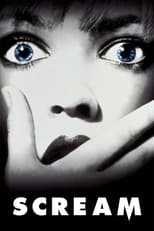
Scream
(1996)The film that restarted the American slasher by explaining it out loud, and thirty years of imitators have not touched it. Kevin Williamson's script does something genuinely difficult: the characters have all seen the same movies you have, they name the rules on screen, and the film is still frightening afterward. That should not work. It works because Wes Craven directs the actual scares completely straight, starting with a twelve minute opening that kills a star before the title card and spends most of its length on a phone call in a kitchen. It cost $14 million and made $173 million, it turned Ghostface into a mask you can buy in any drugstore in October, and it is the only entry here where the meta layer is the point rather than the maintenance. Nothing else in the franchise is arguing for the top spot.
Streaming on Hulu, Paramount+ and Peacock
Rank Scream your way
Our top 5, head-to-head. Tap the one you prefer and we will build your order, then show you where you disagree with us.
The Reel
One sharp movie newsletter, every Tuesday
What to watch, what to skip, and where it lands on the rankings. Free, no spam, unsubscribe anytime.
Just want the tier sheet? Download it free, no email needed.
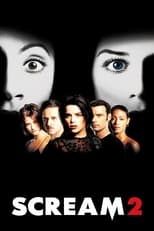
Scream 2
(1997)The best sequel by a clear margin, made in barely a year while the first one was still in theatres, and it turns that speed into its subject: a sequel about sequels, set on a campus where a film called *Stab* has just been made out of the first film's murders. The opening in the cinema is the sharpest scene in the franchise after the original's kitchen, and the classroom argument about whether a sequel can ever beat the first is the series being funny about its own existence rather than smug. Craven also stages the best pure set piece in any of these, the police car with the unconscious Ghostface in the front seat. It is one reveal too many at the end and the killers' motive is the weakest of the seven, which is the whole reason it is not in S.
Streaming on Hulu, Paramount+ and Peacock
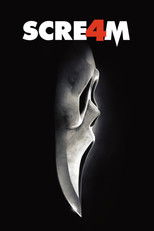
Scream 4
(2011)The most reappraised film in the franchise and the last one Wes Craven directed, arriving eleven years after the third and aimed squarely at the remake era that the first film had accidentally helped create. Its argument, that a generation raised on livestreams would treat being the victim of a famous crime as a career, was written off in 2011 as a gimmick and reads now like it was filed early. It has the franchise's funniest opening, a set of nested fake-outs that keeps starting the movie over, and in Jill it has the only Ghostface whose motive is genuinely disturbing rather than merely explained. It underperformed badly at $97 million, which stopped the series for a decade. It is the one entry here where the audience and the film have swapped positions since release.
Streaming on Paramount+
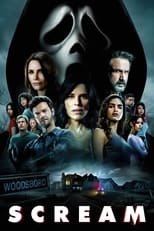
Scream
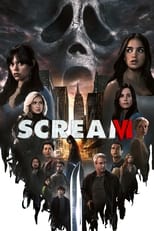
(2022)The requel, and it invents that word on screen to describe itself: not a remake, not a sequel, a new cast doing the old plot with the surviving originals in the room. Matt Bettinelli-Olpin and Tyler Gillett take over from Craven and the direction is confident, meaner and bloodier than the Craven films ever were, and the opening is a genuine rethink of the 1996 one: the girl on the phone survives it, and the film spends the rest of its length on what that costs her. What holds it back is that the commentary has flattened into a list: characters explain the rules of a legacy sequel to each other in a way the 1996 film would have found too easy, and the new leads are asked to carry a franchise while the old ones keep taking the scenes. It made $139 million on $24 million and it proved the series had life left, which is not nothing.
Streaming on Netflix and Paramount+
Scream VI
(2023)Moves the survivors to New York and gets a real film out of the change of address: a subway car on Halloween full of people in masks, a bodega, a fire escape crossing between apartments that is the single most sustained sequence of tension in any sequel here. It is also the first one without Sidney Prescott, and it turns out the franchise can carry that for two hours as long as the set pieces are this good. The problem is the ending. The reveal asks you to accept a motive that undoes a character from the previous film for reasons the film narrates rather than dramatises, and it drags an otherwise excellent thriller back down to the middle of the pack. Highest audience score of any sequel, and the third act is still the reason it is not higher.
Streaming on Netflix and Paramount+
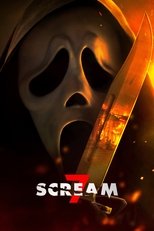
Scream 7
(2026)Kevin Williamson directs one of these for the first time, thirty years after writing the first, and the film he makes is a deliberate closing of the circle: Neve Campbell back as Sidney after sitting out the sixth over a pay dispute, Courteney Cox back, and the plot turning on Sidney's daughter being targeted in the town where she went to hide. Roger L. Jackson is still the voice, as he has been in all seven. It is the highest grossing entry in the franchise at about $214 million, and it is also the third legacy return in a row on a series whose original joke was that it could see this coming. The requel leads it spent two films building are absent for off-screen reasons, so the film has to restart a cast for the second time in five years, and TMDB users have it at 6.2, second lowest of the seven. Placed here on structure rather than on craft: Williamson can still write a Ghostface phone call better than anyone alive.
Rent or buy only
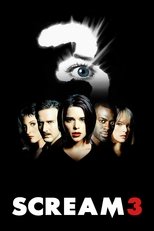
Scream 3
(2000)The one everybody agrees on, and the reasons it went wrong are unusually well documented. Williamson did not write it, the Columbine shootings had made a studio nervous about a teen slasher, and the result is a film that pulls its punches on the violence while trying to be a Hollywood satire about the making of *Stab 3*. The idea is not bad. A killer stalking a set where actors are playing the earlier murders should work. But the rules speech is delivered by a video cassette, the trilogy conceit is used as an excuse for anything to happen, and the reveal hands Sidney a secret half-brother who explains the entire franchise as a family matter. It grossed $162 million on $40 million, so it is not a flop, and it is still the only one of the seven that is a chore to sit through.
Streaming on Hulu, Peacock and Starz
Your turn
That is our Scream ranking. Here is a blank one for yours.
All 7 Scream films, one tap each, S down to D. It saves as you go and it prints. No email, no signup.
Open your Scream tier sheetHow to Build Your Own Scream Tier List
The card above builds one from your taps and nothing else, no star ratings, and on this franchise that gap matters more than usual. Five of the seven sit within half a point of each other on every rating site there is, which tells you almost nothing, because the disagreements about Scream are not about quality in the abstract. They are about whether Scream 4 was ahead of its time or merely late, and whether a great two hours with a bad last ten minutes outranks a decent two hours that lands. A head-to-head forces that. Asking yourself whether you would rather rewatch the subway scene or the police car scene gets an answer in a second, and it is often not the one the scores predicted.
There are seven, and almost nobody argues about the first one. Shortlist ranks the whole run head-to-head, keeps the list current as the next one arrives, and gives every ranking a share link for the friend who still thinks Scream 3 is underrated.
Read more about the comparison-based approach in our movie tier list guide.
Two different things get scored around this page. The S to D tiers above are editorial, and S means a film that held up rather than one that reviewed well on opening weekend. The score you see in the app is a different number: it is built from the head-to-head comparisons you make, scaled to 0 to 10, not from critic averages. How Shortlist scores work sets out the whole method.

This website uses TMDB and the TMDB APIs but is not endorsed, certified, or otherwise approved by TMDB.
What Order Should You Watch the Scream Movies In?
Release order, and for once that is not a cop-out. Unlike Halloween or the Texas Chain Saw films, Scream has exactly one continuity. No entry deletes another, no film reboots the timeline, and every one of the seven assumes you saw the one before it. Watch them as they came out:
Scream (1996), Scream 2 (1997), Scream 3 (2000), Scream 4 (2011), Scream (2022), Scream VI (2023), Scream 7 (2026). That is 810 minutes, about 13 and a half hours.
The three casts, which is the split people actually mean. Films one to four are the Craven era, built around Sidney Prescott, Gale Weathers and Dewey Riley, and they work as a closed four film story. The 2022 requel and Scream VI hand the franchise to the Carpenter sisters and the Meeks-Martin twins while the originals appear around them. Scream 7 returns Sidney to the centre. You can watch the Craven four and stop, and it is a complete arc. You cannot start at the 2022 film, because it is built entirely out of the first one.
The short route, if seven is too many. Scream (1996), then Scream 2, then Scream 4. Skipping the third is the one skip this franchise genuinely supports: the fourth film recaps what you need in its opening and the third contributes a family revelation the later films barely mention. That is 343 minutes, just under six hours, and it is the strongest version of this series.
Scream Tier List FAQ
What is the best Scream movie?
The original Scream (1996), and it is not a close argument. Kevin Williamson wrote characters who have seen the same horror films the audience has and name the rules out loud, and Wes Craven then directed the scares completely straight anyway, starting with a twelve minute opening that kills a star before the title card. It cost $14 million and made $173 million. The best case against it is Scream 2, which is the strongest sequel here and is funnier about its own existence, but it has one reveal too many.
How many Scream movies are there?
7 released films, from Scream (1996) to Scream 7 (2026). Two of them are titled simply Scream, which is why this list shows the year next to those: the 1996 original and the 2022 requel. Scream 8 is not ranked here because it has no release date, and a tier list that ranks unreleased films is a wish list.
What order should you watch the Scream movies in?
Release order, and unusually for a horror franchise that is the whole answer. Scream has one continuity: no entry deletes another, nothing reboots the timeline, and each film assumes you saw the one before it. So it is Scream (1996), Scream 2, Scream 3, Scream 4, Scream (2022), Scream VI, Scream 7, about 13 hours in total. If you want a shorter route, watch the first, second and fourth: skipping the third is the one skip this series genuinely supports.
Is Scream 4 underrated?
Yes, and it is the biggest reappraisal in the franchise. In 2011 its argument, that a generation raised on livestreams would treat being the victim of a famous crime as a career, read as a gimmick, and the film underperformed at $97 million and stopped the series for a decade. Watched now it looks filed early. It is also the last film Wes Craven directed, it has the funniest opening in the series, and in Jill it has the only Ghostface whose motive is genuinely disturbing rather than merely explained.
Why is Scream 3 the worst one?
Three things went wrong at once. Kevin Williamson did not write it, the studio had gone nervous about teen slasher violence, and the film pulls its punches while trying to be a Hollywood satire about the making of Stab 3. The premise is fine, a killer stalking a set where actors are playing the earlier murders, but the rules speech arrives on a video cassette and the reveal gives Sidney a secret half-brother who explains the whole franchise as a family matter. It still grossed $162 million, so it is not a flop, just the only one that is a chore.
Do you need to watch the old Scream movies before the new ones?
Before the 2022 film, yes, and specifically the 1996 one. The requel is built entirely out of the original: its plot, its rules and its returning characters only land if you know what they are returning from. After that the sixth and seventh films carry enough forward that you can follow them from the 2022 entry alone. The four Craven films also work as a closed story if you want to stop there, which is a real option rather than a consolation prize.
Which Scream cast is which?
There are three. Films one to four are the Craven era, built around Sidney Prescott, Gale Weathers and Dewey Riley. The 2022 requel and Scream VI hand the franchise to the Carpenter sisters and the Meeks-Martin twins with the originals appearing around them. Scream 7 returns Sidney to the centre, with Neve Campbell back after sitting out the sixth and Courteney Cox alongside her. The one constant across all seven is Roger L. Jackson, who has voiced Ghostface every time.
Related Tier Lists
The Reel
One sharp movie newsletter, every Tuesday
What to watch, what to skip, and where it lands on the rankings. Free, no spam, unsubscribe anytime.
Just want the tier sheet? Download it free, no email needed.
Rank the Scream films your way
Download Shortlist and build your own Scream tier list with head-to-head comparisons. It's free.


From The Reel
Recent posts on our blog that link to this list.