Tier List
Star Trek Movies Tier List: All 13 Films Ranked (2026)
All 13 theatrical Star Trek films, from 1979's The Motion Picture through the Next Generation run to the Kelvin timeline and Star Trek Beyond, ranked from S-tier to D-tier. Then settle The Wrath of Khan versus First Contact yourself with head-to-head comparisons.
The Complete Star Trek Tier List


Star Trek is the rare franchise where the even-numbered rule became folk wisdom because it was very nearly true for a decade, and where the best film in the run came second and has never been beaten. Three crews, two timelines, thirty-seven years from the first film to the latest, and a seven year gap in the middle. Here is every theatrical Star Trek film ranked into classic S/A/B/C/D tiers, the Kelvin timeline included. Think The Motion Picture deserves better, or that First Contact is the actual number one? Settle it yourself in minutes with Shortlist.
Each film below also says where to watch it in the US, checked October 7, 2026 (JustWatch). Rights move, so those lines disappear rather than guess once that check is over three weeks old.
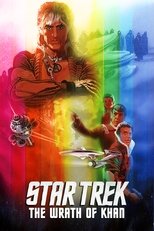
Star Trek II: The Wrath of Khan
(1982)The film that saved the franchise and the one every other entry is measured against. Nicholas Meyer shot it as a naval submarine picture, gave Kirk an age and a son and a consequence, and let Ricardo Montalban play revenge as grief. The Kobayashi Maru frames the whole thing, the Mutara Nebula is still the best space battle in the series, and the ending earns a death that the sequel then walked back. Forty years of Star Trek films have not gotten near it.
Streaming on Paramount+
Star Trek: First Contact
(1996)The Next Generation crew got exactly one great movie and this is it. Jonathan Frakes directs the Borg as a horror antagonist rather than a puzzle, Patrick Stewart plays Picard as a man with unfinished trauma instead of a diplomat, and the Ahab reading of the character is the best writing the films ever gave him. Zefram Cochrane and the Phoenix keep the optimism intact underneath it, which is why it feels like Star Trek and not just a good sci-fi thriller.
Streaming on Paramount+
Rank Star Trek your way
Our top 5, head-to-head. Tap the one you prefer and we will build your order, then show you where you disagree with us.
The Reel
One sharp movie newsletter, every Tuesday
What to watch, what to skip, and where it lands on the rankings. Free, no spam, unsubscribe anytime.
Just want the tier sheet? Download it free, no email needed.
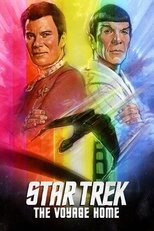
Star Trek IV: The Voyage Home
(1986)The one with the whales, the one your parents liked, and the highest grossing Star Trek film until 2009. Leonard Nimoy directs a time travel comedy with no villain and almost no phaser fire, drops the crew into 1986 San Francisco and simply watches them be strange in it. Its trick is that the jokes never come at the crew's expense. It is the most purely likeable entry in the run and the easiest one to hand somebody who has never watched any of it.
Streaming on Paramount+
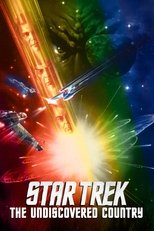
Star Trek VI: The Undiscovered Country
(1991)Nicholas Meyer comes back to write the original cast out, and gives them a cold war thaw to be wrong about first. Kirk's bigotry toward the Klingons is treated as a real flaw rather than a beat, Christopher Plummer chews the part of Chang with total commitment, and the courtroom and the assassination plot give the film an actual shape. A send off that argues with its own heroes is a much better goodbye than a victory lap.
Streaming on Paramount+
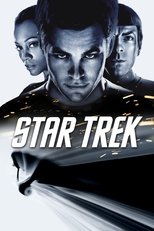
Star Trek
(2009)J.J. Abrams reboots it with a time travel device that lets the old continuity stay standing, and casts it almost perfectly: Chris Pine finds a Kirk who is not an impression, Zachary Quinto and Karl Urban are uncanny. It is faster and shinier than Star Trek had ever been and it works as a summer movie, which is what it was for. The cost is that the plot is thin and Nero is a placeholder, and both are the reason it sits below the top two rather than in them.
Streaming on Paramount+
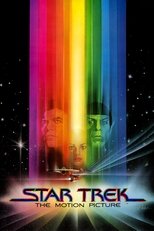
Star Trek: The Motion Picture
(1979)Slow, cold, and much better than its reputation once you accept it is not an adventure film. Robert Wise made a 2001-shaped picture about a machine that has outgrown its makers, Jerry Goldsmith wrote the theme the entire franchise still uses, and the V'Ger reveal is a genuinely big idea. The 2001 Director's Edition trims the endless drydock gawking and is the version to watch. The nickname was The Motionless Picture and that is only half unfair.
Streaming on Paramount+
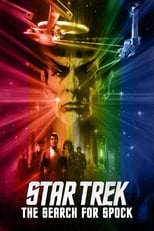
Star Trek III: The Search for Spock
(1984)The middle chapter of the trilogy, and the one that has to spend its runtime undoing the best ending in the series. It is uneven and Christopher Lloyd's Kruge is a strange choice for a Klingon, but it contains two of the biggest things the crew ever does: they steal the Enterprise, and then they lose it. "The needs of the one" landing as an answer to the last film is the reason this one is affectionately kept rather than skipped.
Streaming on Paramount+
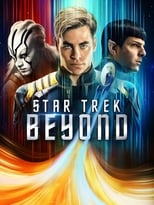
Star Trek Beyond
(2016)Justin Lin and a Simon Pegg script quietly deliver the most Star Trek shaped of the three Kelvin films: the ship is destroyed in the first act, the crew is split into pairs, and the movie is about what they are like as colleagues. Jaylah is the best new character the reboot made. Idris Elba is buried under prosthetics playing an idea the film explains too late, and the Beastie Boys ending is either the highlight or the low point depending entirely on you.
Streaming on Paramount+
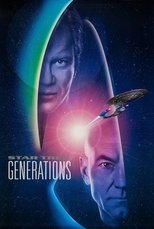
Star Trek Generations
(1994)The handover film, and it is built around a device (the Nexus) that exists to get two captains into one scene. The Enterprise-D saucer crash is a real set piece and the Kirk and Picard team up is a nice idea on paper, but Kirk dies twice, the second time under a bridge, and there is no version of that which is a fitting end for the character the last six films were about. Malcolm McDowell is doing good work in a plot nobody can summarise.
Streaming on Paramount+
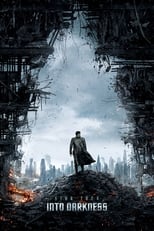
Star Trek Into Darkness
(2013)Well made, well acted, and hollow at the middle. Benedict Cumberbatch is genuinely excellent right up to the moment the film says the name Khan and turns into a lesser remix of a better movie, complete with the Wrath of Khan death scene reversed and drained of its weight. The year of insisting he was not Khan is its own small piece of franchise history. Two thirds of a strong thriller attached to a fan service ending it did not earn.
Streaming on Paramount+
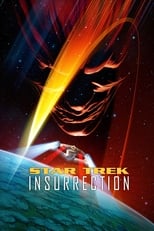
Star Trek: Insurrection
(1998)A perfectly pleasant two part episode of The Next Generation with a film budget attached. The stakes are 600 villagers, the villains are undone by their own skin condition, and the biggest moment is Data and Picard singing Gilbert and Sullivan. Nothing in it is offensive and nothing in it needed a cinema. Coming directly after First Contact is what makes it feel like a bigger fall than it is.
Streaming on Paramount+
Star Trek: Nemesis
(2002)The film that ended the Next Generation run and put the whole franchise on ice for seven years. A Picard clone, a Data twin, a dune buggy chase, and a death scene that copies the Wrath of Khan sacrifice without any of the setup that made it mean something. Tom Hardy is fine and completely miscast. Stuart Baird did not watch the series and it shows in every scene where the crew talk to each other.
Streaming on Paramount+
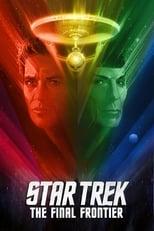
Star Trek V: The Final Frontier
(1989)William Shatner directs, and goes looking for God at the centre of the galaxy on a budget that could not afford the trip. The rock men were cut, the effects were done by the wrong house, and the Enterprise flies to the middle of the universe in an afternoon. The consensus bottom of the run, with one real defence: the campfire scenes between Kirk, Spock and McCoy are the warmest the three of them ever got to be.
Streaming on Paramount+
Your turn
That is our Star Trek ranking. Here is a blank one for yours.
All 13 Star Trek films, one tap each, S down to D. It saves as you go and it prints. No email, no signup.
Open your Star Trek tier sheetHow to Build Your Own Star Trek Tier List
The card above builds one from your taps and nothing else, no scores, which matters more here than on most franchises: a 1-to-10 rating cannot separate the four or five Star Trek films that are all somewhere around an 8, and separating those is the entire argument.
There are thirteen, and the eight the card leaves out are where a Star Trek ranking actually gets interesting. Shortlist ranks the full run head-to-head, keeps the list as the franchise keeps returning to cinemas, and gives every ranking a share link for whoever needs to be told they are wrong about The Final Frontier.
Read more about the comparison-based approach in our movie tier list guide.
Two different things get scored around this page. The S to D tiers above are editorial, and S means a film that held up rather than one that reviewed well on opening weekend. The score you see in the app is a different number: it is built from the head-to-head comparisons you make, scaled to 0 to 10, not from critic averages. How Shortlist scores work sets out the whole method.

This website uses TMDB and the TMDB APIs but is not endorsed, certified, or otherwise approved by TMDB.
What Order Should You Watch the Star Trek Movies In?
By crew, for a first watch. The films split cleanly into three runs and you do not have to take them all. The original crew: The Motion Picture (1979) through The Undiscovered Country (1991), six films, and II, III and IV are one continuous story that has to be watched in that order. The Next Generation crew: Generations (1994), First Contact (1996), Insurrection (1998), Nemesis (2002). The Kelvin timeline: Star Trek (2009), Into Darkness (2013), Beyond (2016), which is a separate continuity and needs nothing before it.
The short version, if you want four. The Wrath of Khan, The Voyage Home, The Undiscovered Country, First Contact. That is the franchise at its best across two crews, and the only prerequisite is knowing who Kirk and Spock are, which you already do.
Release order, for a rewatch. The films talk to each other across crews more than people remember, and the Klingon thread that runs from The Search for Spock to The Undiscovered Country only pays off if you take them in sequence.
Star Trek Tier List FAQ
What is the best Star Trek movie?
Star Trek II: The Wrath of Khan (1982), and it is not an especially close argument. It gave the series a villain with a reason, gave Kirk a cost, and did it on a fraction of the first film's budget by shooting space combat like a submarine duel. The one real challenger is First Contact (1996), which is the best Next Generation film and the better horror movie of the two. Critics and fans mostly land on Khan; the people who take First Contact are not being unreasonable.
How many Star Trek movies are there?
There are 13 theatrical Star Trek films, released between 1979 and 2016: six with the original crew, four with the Next Generation crew, and three in the rebooted Kelvin timeline. Star Trek Beyond (2016) is the most recent one to reach cinemas, and the gap since then is the longest the franchise has ever gone without a theatrical release.
Is Star Trek: Section 31 part of the list?
Not for ranking purposes, and that is why this Star Trek movies tier list leaves it out. Star Trek: Section 31 (2025) was made for Paramount+ as a television film rather than for cinemas, so it does not belong to the theatrical run the other thirteen share. If you want it ranked, rank it against the streaming era of Star Trek, where it is competing with the shows it came out of.
Is the even-numbered Star Trek movie rule true?
It was true enough for long enough to become a law. Films II, IV and VI are the three best of the original crew run and I, III and V are the weaker three, so for twelve years the pattern held. Then Generations was the seventh and mediocre, First Contact was the eighth and excellent, and Insurrection was the ninth and forgettable, which kept it alive. Nemesis is the tenth and the worst of the Next Generation films, and that is where the rule finally died.
Do you need to watch the shows before the movies?
No, with two asterisks. The original crew films assume you know Kirk, Spock and McCoy, but they introduce themselves quickly enough that the shows are optional. Generations and Nemesis lean hardest on the series, and Insurrection plays as an episode. The 2009 reboot was built specifically to need nothing, which is why it is still the best place to start if you have never seen any of it.
Related Tier Lists
The Reel
One sharp movie newsletter, every Tuesday
What to watch, what to skip, and where it lands on the rankings. Free, no spam, unsubscribe anytime.
Just want the tier sheet? Download it free, no email needed.
Rank the Star Trek films your way
Download Shortlist and build your own Star Trek tier list with head-to-head comparisons. It's free.


From The Reel
Recent posts on our blog that link to this list.